Sony ZV E10 II Review 2026: Worth Your Money?
Are you looking for a powerful yet affordable mirrorless camera that can shoot stunning 4K video and crisp 26MP photos? The Sony ZV-E10 II has been one of the most talked about cameras since its launch.
It sits at a sweet spot between price and performance. Content creators, vloggers, and beginner filmmakers all love it. But does it still hold up in 2026?
In this detailed Sony ZV-E10 II review, we break down every feature, every flaw, and every reason you should (or should not) buy this camera today. Keep reading to find out if this is the right camera for your creative journey.
Key Takeaways
- The Sony ZV-E10 II features a 26MP APS-C Exmor R CMOS sensor that delivers sharp images and high quality 4K video at up to 60fps. This is a solid upgrade from the original ZV-E10’s 24.2MP sensor.
- Battery life is significantly improved with the larger NP-FZ100 battery. You can expect around 610 shots per charge or over two hours of continuous 4K recording. That is a 30% improvement over the first generation model.
- There is no in-body image stabilization (IBIS). The camera relies on electronic stabilization and lens-based optical stabilization. This is a notable omission for a camera at this price point.
- Autofocus is fast and reliable with a 759-point hybrid phase detection system. It tracks faces, eyes, and even animals with impressive accuracy. The AI-based subject recognition makes shooting video a breeze.
- The price starts at around $999 for the body only and $1,099 with the 16-50mm kit lens. This makes it one of the best value APS-C mirrorless cameras for video-focused creators in 2026.
- Overheating can be a concern during extended 4K 60fps recording sessions. Some users report the camera shutting down after 20 to 25 minutes of continuous high bitrate recording.
Sony ZV E10 II: Design and Build Quality

- Exmor R CMOS sensor: The ZV-E10 II features Sony's most advanced sensor technology in an...
- Interchangeable lenses to capture your vision : From the G Master series, which blends...

Last update on 2026-09-09 / Affiliate links / Images from Amazon Product Advertising API
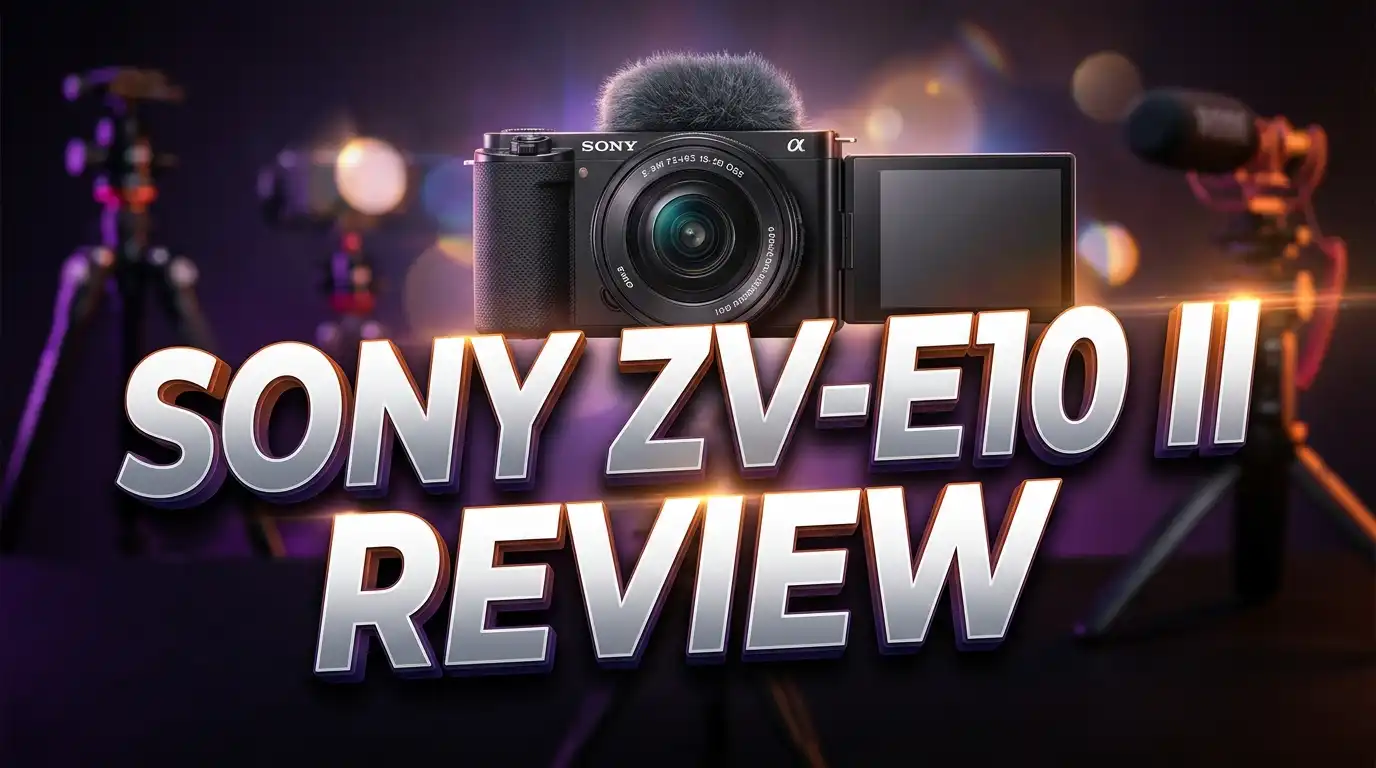
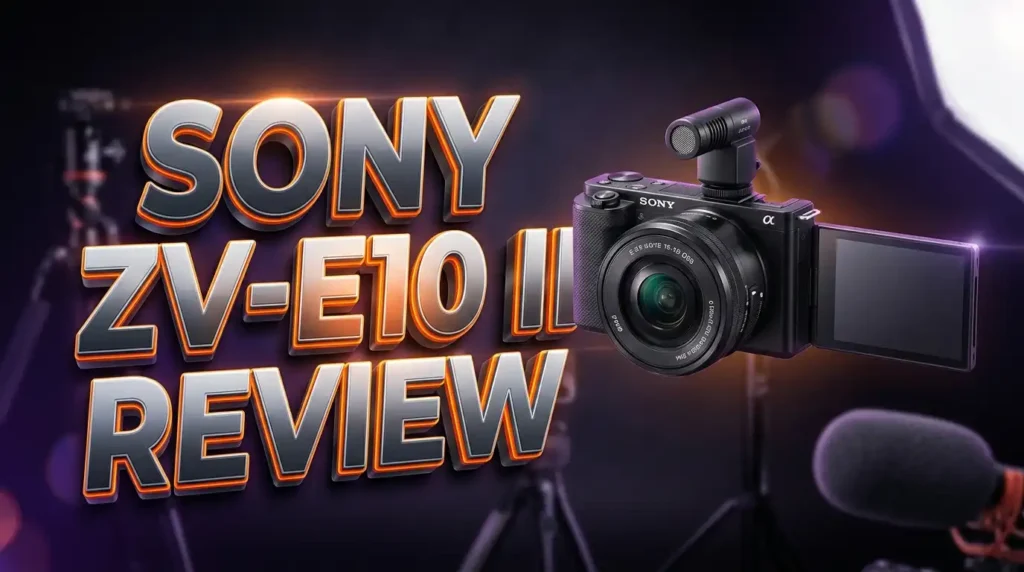
The Sony ZV-E10 II has a compact and lightweight body that weighs just 13.3 ounces. It fits comfortably in one hand. Sony kept the form factor small, which makes it ideal for on-the-go vlogging and travel content.
The body is made from a combination of polycarbonate and metal components. It does not feel cheap in your hands. However, it is not weather-sealed, so you should be careful around rain and dust.
Sony added a vari-angle touchscreen LCD that flips out and rotates 180 degrees. This is a huge improvement over the original model’s tilt-only screen. The rotating screen also supports a vertical UI, which is perfect for creators shooting content for Instagram Reels or TikTok.
The grip is slightly deeper than the first ZV-E10. This helps with handling, especially with heavier lenses attached. A small tally lamp on the front tells you the camera is recording. Overall, the design is clean, modern, and purpose-built for content creation.
26MP APS-C Sensor Performance
The heart of the Sony ZV-E10 II is its 26-megapixel APS-C back-illuminated Exmor R CMOS sensor. This is the same sensor technology found in more expensive Sony cameras like the a6700.
Image quality is excellent for both photos and video. The ISO range stretches from 100 to 32000, which gives you solid performance in low light conditions. Noise is well controlled up to ISO 3200, and images remain usable at higher settings.
The sensor uses a fully electronic shutter. There is no mechanical shutter option. This means the camera is completely silent during photo capture. However, rolling shutter distortion can appear with fast-moving subjects or quick pans.
Color science is pleasing straight out of camera. Sony’s processing engine produces natural skin tones and accurate colors. Photographers will appreciate the 14-bit RAW output for maximum editing flexibility. For a camera at this price, the sensor performance punches well above its weight.
4K Video Recording Capabilities
This is where the Sony ZV-E10 II truly shines. It records UHD 4K at 30fps using the full width of the sensor with no crop. You also get 4K at 60fps from a 1.1x crop, which is barely noticeable.
The camera supports 10-bit 4:2:2 internal recording. This gives you rich color data for post-production grading. The maximum bitrate reaches 200 Mbps, which is impressive for a sub-$1000 camera body.
You also get S-Cinetone color profiles and S-Log3 for professional color grading workflows. The camera even lets you import custom LUTs and preview them while shooting. This is a feature typically reserved for much more expensive cameras.
Slow motion lovers will enjoy the Full HD 120fps mode for smooth, cinematic slow-motion footage. The video quality at this setting is clean and detailed. For vloggers and filmmakers, the video specs of the ZV-E10 II are hard to beat at this price.
Top 3 Alternatives for Sony ZV E10 II

- X-S20 offers the perfect blend of power and portability to turn thoughts and ideas into...
- X-S20 combines powerful sensor and processor technologies to deliver a blistering...
Last update on 2026-09-26 / Affiliate links / Images from Amazon Product Advertising API

- High Image Quality: Canon EOS R50 4K digital camera features a 24.2 Megapixel CMOS (APS-C...
- High-Speed Continuous Shooting: Capture fast action with up to 12 fps with Electronic...
Last update on 2026-09-25 / Affiliate links / Images from Amazon Product Advertising API

- Designed for creators, vloggers and streamers: Nikon's easy to use Z 30 mirrorless 4K...
- Pro-grade video quality: Crisp 4K resolution, autofocus with eye tracking for people and...
Last update on 2026-09-25 / Affiliate links / Images from Amazon Product Advertising API
Autofocus System: 759-Point Hybrid AF
The Sony ZV-E10 II uses a 759-point fast hybrid phase detection autofocus system. This covers approximately 97% of the sensor area. Focus acquisition is fast, accurate, and reliable in most shooting conditions.
Sony’s AI-based subject recognition can detect and track humans, animals, birds, insects, cars, trains, and airplanes. For vloggers, the real-time eye AF locks onto your eyes and holds focus even as you move around the frame.
The touch tracking feature on the LCD screen lets you tap a subject to start tracking. This works smoothly in both photo and video modes. The camera rarely hunts for focus, even in challenging low light situations.
One standout feature is the focus transition speed control. You can adjust how quickly the camera shifts focus between subjects. This is useful for creating cinematic rack-focus effects in your videos. The autofocus alone makes this camera a top pick for solo creators who need reliable self-shooting performance.
Battery Life and Power Options
Sony made a smart move by upgrading the battery to the NP-FZ100. This is the same battery used in full-frame Sony cameras like the a7 series. The result is a massive improvement in battery life.
You can shoot approximately 610 still photos per charge according to CIPA ratings. For video, the camera delivers around 2 hours and 12 minutes of continuous 4K recording. That is a 30% increase over the original ZV-E10.
The camera also supports USB-C power delivery. You can charge the battery while shooting or power the camera directly from an external power bank. This is a lifesaver for long recording sessions, live streams, and extended shoots.
Keep in mind that shooting at 4K 60fps with 10-bit recording will drain the battery faster. But for standard 4K 30fps vlogging, the battery life is more than enough for a full day of casual shooting.
Audio Quality and Built-in Microphone
- Exmor R CMOS sensor: The ZV-E10 II features Sony's most advanced sensor technology in an...
- Interchangeable lenses to capture your vision : From the G Master series, which blends...
Last update on 2026-09-09 / Affiliate links / Images from Amazon Product Advertising API
Audio matters for content creators, and Sony understands this. The ZV-E10 II features a three-capsule built-in microphone with a directional audio pickup pattern. It captures clear, focused sound from the front of the camera.
The built-in windscreen accessory helps reduce wind noise during outdoor shoots. Voice quality is surprisingly good for a camera microphone. You can easily use it for casual vlogs without needing an external mic.
For better audio quality, the camera has a 3.5mm microphone input and a 3.5mm headphone jack for real-time monitoring. It also supports digital audio via the Multi Interface Shoe, which works with Sony’s ECM wireless microphone systems.
The camera includes audio level controls and automatic wind noise reduction settings. You can adjust microphone sensitivity directly from the menu. These audio features make the ZV-E10 II a true all-in-one content creation tool right out of the box.
Vari-Angle Touchscreen and User Interface
The 3.0-inch vari-angle touchscreen is one of the biggest upgrades over the original model. It flips out to the side and rotates a full 270 degrees. This gives you complete freedom to shoot at any angle.
The screen resolution is sharp enough for accurate framing and focus checking. Touch autofocus and touch tracking work smoothly on the LCD. You can also navigate menus with touch input, which speeds up camera setup.
Sony added a vertical shooting UI that automatically rotates the display when you hold the camera in portrait orientation. This is a thoughtful addition for creators who shoot vertical content for social media platforms.
The menu system follows Sony’s updated layout. It is organized into clear categories and uses a tabbed interface. Beginners will find it easier to locate settings compared to older Sony cameras. The interface is clean, responsive, and well-suited for quick adjustments during shoots.
Electronic Stabilization: No IBIS but Still Usable
The Sony ZV-E10 II does not have in-body image stabilization. This is one of its biggest drawbacks. Instead, it relies on electronic image stabilization (EIS) and optical stabilization from compatible lenses.
The Active SteadyShot electronic stabilization mode does a decent job for walking vlogs. It adds a small crop to the image, but the footage comes out noticeably smoother. For stationary shooting, the stabilization works very well.
However, EIS has its limits. Heavy movement and running will still produce shaky footage. If stabilization is a top priority for you, consider pairing the camera with a gimbal or choosing a camera with IBIS like the Fujifilm X-S20 or Sony a6700.
For most vlogging situations, the combination of lens-based OIS and Active SteadyShot provides acceptable stabilization. It is not perfect, but it gets the job done for typical content creation workflows.
Overheating: The Elephant in the Room
The overheating issue is a well-known concern with the Sony ZV-E10 II. During extended 4K 60fps recording at high bitrates, the camera can overheat and shut down after 20 to 25 minutes.
At standard 4K 30fps settings, the situation is much better. Most users report continuous recording times well beyond one hour without overheating warnings. The problem mainly surfaces at the highest quality settings.
There are several ways to manage this issue. Flipping the LCD screen outward helps dissipate heat. Some users attach small external cooling fans from brands like Ulanzi. You can also set the auto power-off temperature to “High” in the settings menu.
Recording to an external recorder like the Atomos Ninja reduces internal heat generation significantly. If you plan to record long-form content at maximum quality, this is worth considering. For typical vlogging sessions under 30 minutes per clip, overheating is rarely a problem.
Connectivity and Streaming Features
The Sony ZV-E10 II offers solid connectivity options. It supports Wi-Fi and Bluetooth for wireless image transfer and remote control via the Sony Creators’ App on your smartphone.
The camera has a USB-C port that supports data transfer, charging, and live streaming. You can use the ZV-E10 II as a high-quality webcam for Zoom calls, live streams, and video conferences. The USB streaming output delivers clean video without overlays.
There is also a micro HDMI output for connecting to external monitors and recorders. This outputs a clean, uncompressed signal for maximum recording quality.
For social media creators, the camera can transfer photos and videos directly to your phone over Wi-Fi. The Bluetooth remote control feature lets you trigger the shutter from a distance. These connectivity options make it easy to integrate the ZV-E10 II into any content creation workflow.
Who Should Buy the Sony ZV E10 II in 2026?
The Sony ZV-E10 II is ideal for vloggers, content creators, and beginner filmmakers. If you create YouTube videos, social media content, or short films, this camera delivers professional-grade results at an accessible price.
It is also a great choice for photographers who want strong video capabilities. The 26MP sensor produces excellent still images. The interchangeable lens system gives you access to Sony’s massive E-mount lens library.
However, this camera is not the best pick for sports or wildlife photographers who need fast burst rates and a viewfinder. It also falls short for professionals who need in-body stabilization or weather sealing.
If you shoot long-form video at maximum quality settings, the overheating issue may frustrate you. But for the vast majority of creators who shoot clips under 30 minutes, the ZV-E10 II performs beautifully. At under $1,000 for the body, it remains one of the best value mirrorless cameras in 2026.
Sony ZV E10 II vs Sony a6700: Which One to Pick?
The Sony a6700 costs about $400 more than the ZV-E10 II. For that extra money, you get in-body image stabilization, a built-in electronic viewfinder, and a more advanced body with better weather resistance.
Both cameras share the same 26MP sensor and BIONZ XR processor. Image quality and video specs are very similar. The a6700 has a slightly faster burst rate at 11fps compared to the ZV-E10 II’s 11fps mechanical equivalent.
The ZV-E10 II wins on portability and price. It is lighter, smaller, and more affordable. It also has dedicated vlogging features like the tally lamp, background defocus button, and product showcase mode.
Choose the a6700 if you need IBIS, a viewfinder, and a more traditional camera experience. Choose the ZV-E10 II if you prioritize portability, video features, and budget savings. Both are excellent cameras in Sony’s APS-C lineup.
Lens Compatibility and Recommendations
The Sony ZV-E10 II uses the Sony E-mount system. This gives you access to over 70 native Sony lenses and dozens more from third-party manufacturers like Sigma, Tamron, and Samyang.
The 16-50mm f/3.5-5.6 OSS II kit lens is a solid starting point. It is compact, lightweight, and provides optical stabilization. For vlogging, the Sony 10-18mm f/4 or Sigma 16mm f/1.4 are popular wide-angle options.
Portrait shooters will love the Sony 50mm f/1.8 OSS for its beautiful bokeh and sharp results. For versatile zoom coverage, the Tamron 17-70mm f/2.8 is a favorite among ZV-E10 II users.
The APS-C lens ecosystem continues to grow. Sony has released several new compact lenses that pair perfectly with this camera’s small body. The interchangeable lens system is one of the biggest advantages the ZV-E10 II has over fixed-lens vlogging cameras.
Final Verdict: Is the Sony ZV E10 II Worth It in 2026?
The Sony ZV-E10 II remains one of the best vlogging cameras you can buy in 2026. Its combination of a high-quality 26MP sensor, excellent 4K video capabilities, reliable autofocus, and improved battery life makes it hard to beat at this price.
The main downsides are the lack of IBIS, potential overheating during demanding shoots, and no electronic viewfinder. These trade-offs exist because Sony prioritized a compact form factor and affordable price.
For the average content creator, these limitations are minor. The camera delivers stunning video quality, beautiful photos, and professional features that used to cost thousands of dollars. The Sony E-mount lens ecosystem adds long-term value to your investment.
If you are a vlogger, YouTuber, or social media creator looking for a reliable camera under $1,000, the Sony ZV-E10 II earns a strong recommendation. It is a creative powerhouse in a pocket-friendly package.
Frequently Asked Questions
Is the Sony ZV E10 II good for photography?
Yes, the Sony ZV-E10 II is a capable photography camera. The 26MP APS-C sensor produces detailed images with excellent color accuracy. It supports 14-bit RAW output for maximum editing flexibility. While it lacks a viewfinder, the vari-angle LCD screen works well for composing shots. It is a great hybrid camera for creators who shoot both photos and videos.
Does the Sony ZV E10 II have image stabilization?
The Sony ZV-E10 II does not have in-body image stabilization (IBIS). It uses electronic stabilization called Active SteadyShot. You can also use lenses with built-in optical image stabilization. For the smoothest footage, pair the camera with a gimbal or a lens that has OIS.
How long can the Sony ZV E10 II record video?
The camera can record up to 13 hours in a single session according to Sony’s specifications. However, at 4K 60fps with 10-bit recording, overheating may shut the camera down after 20 to 25 minutes. At 4K 30fps, most users report over one hour of continuous recording without issues.
Is the Sony ZV E10 II worth the upgrade from the original ZV E10?
The ZV-E10 II offers several significant upgrades. These include a better sensor, improved battery life, vari-angle screen, 10-bit video, and S-Cinetone. If you use the original ZV-E10 for video, the upgrade is well worth it. The improved battery life and video quality alone justify the cost.
Can the Sony ZV E10 II be used for live streaming?
Yes, the Sony ZV-E10 II works as a USB webcam for live streaming. Connect it to your computer via USB-C. The camera outputs clean video without overlays. You can also use the micro HDMI output with a capture card for higher quality streaming setups.
What memory card does the Sony ZV E10 II use?
The Sony ZV-E10 II uses a single SD card slot that supports UHS-I and UHS-II cards. For the best performance with 4K 60fps recording, use a UHS-II V60 or V90 rated card. A fast card ensures smooth recording without dropped frames.

I’m Lipi, a passionate blogger with a keen interest in artificial intelligence and its applications. On my blog, lipiai.blog, I share information about AI, review different AI tools, and provide helpful guides. My goal is to make AI easy to understand for everyone. I enjoy simplifying complex ideas so that both beginners and tech-savvy folks can learn.