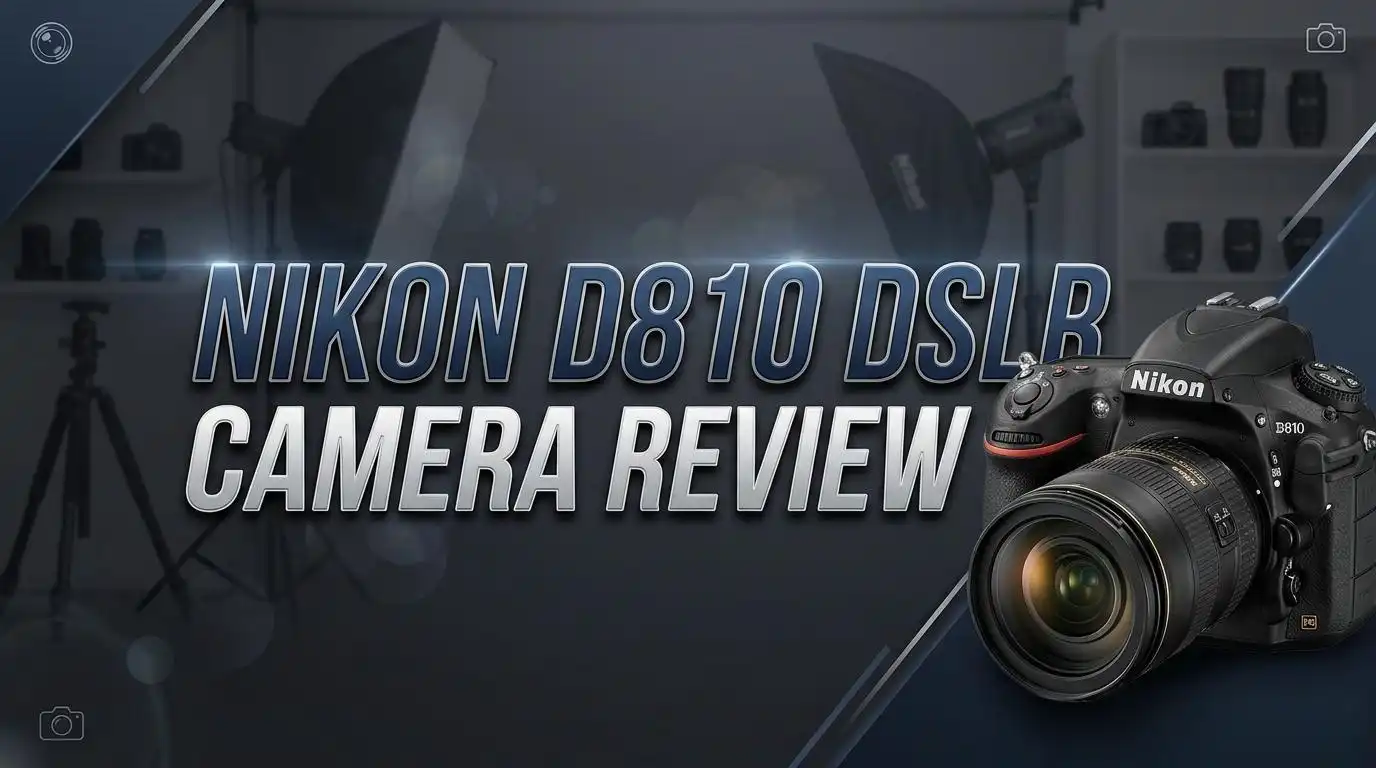
Nikon D810 DSLR Camera Review 2026: Still Worth It?
The Nikon D810 launched back in 2014. Over a decade later, photographers still talk about it with deep respect. This full frame DSLR packs 36.3 megapixels, shoots at 5 frames per second, and delivers images with stunning clarity. But does it hold up in 2026?
In a market flooded with mirrorless options, the D810 offers something different. It gives you a proven optical viewfinder, long battery life, and a massive lens ecosystem.
Many professional photographers still use it as their primary or backup body. The image quality at ISO 64 base remains class leading, even by today’s standards.
This review breaks down everything you need to know. We cover image quality, autofocus, video features, build quality, and much more.
Key Takeaways
- The 36.3MP full frame sensor without an optical low pass filter produces some of the sharpest images you’ll find from any DSLR. The base ISO of 64 gives you incredible dynamic range for landscape and studio work. Files hold up extremely well to cropping and large prints.
- The 51 point autofocus system is reliable and accurate for most shooting situations. It works well in good light and performs adequately in dim conditions. The system uses the same Multi-CAM 3500FX module found in higher end Nikon bodies.
- Battery life is rated at approximately 1,200 shots per charge using the EN-EL15 battery. This makes it one of the longer lasting DSLRs. You can easily get through a full day of shooting without swapping batteries.
- Video capabilities include Full HD 1080p recording at up to 60fps. This was impressive at launch, though it lacks 4K recording. Videographers may want a different option, but casual video users will find it sufficient.
- Build quality is exceptional with a magnesium alloy body that is weather sealed against dust and moisture. The shutter is rated for 200,000 actuations. This camera was built to last, and many units are still going strong after years of heavy use.
- The D810 is available at a fraction of its original price on the used market in 2026. This makes it one of the best value full frame cameras you can buy today. You get professional grade results without spending thousands on a new body.
Nikon D810 DSLR Camera Overview

- 36.3 MP FX format CMOS sensor without an Optical Low Pass Filter (OLPF)
- 30 percent faster Expeed 4 image processing engine. Shutter speed: 1/8000 to 30 sec
Last update on 2026-11-09 / Affiliate links / Images from Amazon Product Advertising API
The Nikon D810 is a full frame DSLR that sits in Nikon’s professional lineup. It replaced the D800 and D800E in June 2014. Nikon designed it as a high resolution camera for photographers who demand maximum detail.
The body weighs approximately 980 grams with a battery and memory card. It measures 146 x 123 x 81.5mm. The camera feels solid and balanced in your hands. It works with both CF and SD memory cards through its dual card slot system.
The EXPEED 4 image processing engine handles data 30 percent faster than its predecessor. This results in quicker autofocus, faster image processing, and better noise reduction. The processor also supports a continuous shooting speed of 5 fps at full resolution.
Nikon removed the optical low pass filter from the D810’s sensor. This was a bold move that paid off. Images come out sharper straight from the camera. Moire is rarely an issue in real world shooting.
Image Quality and Sensor Performance
The D810’s 36.3 megapixel FX format CMOS sensor is the heart of this camera. It captures a huge amount of detail. Each file gives you plenty of room to crop without losing quality.
The native ISO range runs from 64 to 12,800. You can expand it down to ISO 32 and up to ISO 51,200. The base ISO of 64 is lower than most cameras. This gives you cleaner files with more dynamic range at the lowest setting.
Dynamic range is where the D810 truly shines. At ISO 64, it delivers approximately 14.8 stops of dynamic range according to DxOMark testing. This means you can recover shadows and pull back highlights with ease. Landscape photographers love this feature.
High ISO performance is good but not outstanding by 2026 standards. Images stay clean up to ISO 3200. Beyond that, noise starts to appear. At ISO 6400, you’ll notice some grain but files remain usable. Cameras like the D850 and Z series perform better at high ISO.
Autofocus System and Speed
The D810 uses Nikon’s Multi-CAM 3500FX autofocus module with 51 focus points. Of these, 15 are cross type sensors. The center point works in light as dim as -2 EV, which is fairly dark.
In good light, the autofocus is fast and precise. It locks onto subjects quickly and holds focus well. Single point AF and dynamic area AF modes work great for portraits and landscapes. Group area AF is useful for tracking subjects that move unpredictably.
Continuous autofocus (AF-C) works well for moving subjects like sports and wildlife. However, the D810 was not designed as a speed camera. At 5 fps, it can’t match the tracking ability of cameras like the Nikon D5 or D500. Photographers who need rapid burst shooting should consider those options.
Live view autofocus relies on contrast detection. This is noticeably slower than the viewfinder’s phase detection system. If you shoot video or use live view frequently, expect some hunting before the camera locks focus.
Build Quality and Ergonomics
The D810 features a magnesium alloy body with extensive weather sealing. It can handle rain, dust, and cold temperatures. This is a camera built for professional use in tough conditions.
The grip is deep and comfortable. You can hold the camera for hours without hand fatigue. All buttons and dials fall naturally under your fingers. Nikon’s ergonomic design is one of the best in the business.
The 3.2 inch LCD screen has 1,229,000 dots of resolution. It displays images clearly and makes menu navigation easy. However, the screen does not tilt or swivel. This can be a limitation for low angle or overhead shooting.
The optical viewfinder covers 100 percent of the frame with 0.7x magnification. It is bright, clear, and shows you exactly what the lens sees. Many photographers still prefer optical viewfinders over electronic ones for their natural feel and zero lag.
The shutter is rated for 200,000 actuations. Many D810 units have surpassed this number and continue to function. The shutter sound is also quieter than the D800. Nikon added a Quiet Continuous mode that reduces shutter noise during sensitive situations.
Top 3 Alternatives for Nikon D810
Nikon D850 is the direct successor to the D810. It offers 45.7 megapixels, 4K video, a tilting touchscreen, and faster 7 fps shooting. It is a significant upgrade in almost every area.

- Nikon designed back side illuminated (BSI) full frame image sensor with no optical low...
- 45.7 megapixels of extraordinary resolution, outstanding dynamic range and virtually no...

Last update on 2026-11-09 / Affiliate links / Images from Amazon Product Advertising API
Canon EOS 5D Mark IV is Canon’s answer to the high resolution full frame DSLR market. It features 30.4 megapixels, 4K video, Dual Pixel AF, and a 61 point autofocus system. It is a strong all rounder.

- High Image Quality: EOS 5D Mark IV digital 4K camera features a 30.4 megapixel full-frame...
- Powerful Image Processor: High-performance DIGIC 6+ Image Processor allows for improved...
Last update on 2026-11-09 / Affiliate links / Images from Amazon Product Advertising API
Sony A7R II is a mirrorless alternative with 42.4 megapixels, 5 axis in body stabilization, and 4K video. It is smaller, lighter, and offers more modern features. The Sony E mount lens selection has grown significantly.

- World’s first Full-frame 5-axis in-body image stabilization optimized for 42.4MP...
- 2.4-million dot XGA OLED Tru-Finder w/ZEISS T- coating, connectivity to smartphones via...
Last update on 2026-11-09 / Affiliate links / Images from Amazon Product Advertising API
Video Recording Capabilities
The D810 records Full HD 1080p video at 24, 25, 30, 50, and 60 frames per second. This gives you smooth footage for various projects. You can also shoot 720p at up to 60 fps.
One major limitation is the lack of 4K video. In 2026, 4K is standard on most cameras. If video is a priority for you, the D810 will feel outdated. The successor D850 added 4K, and mirrorless cameras now offer 4K and even 8K options.
The D810 does offer uncompressed HDMI output. You can record clean footage to an external recorder. This gives you more flexibility in post production. The camera also provides manual control over audio levels through its built in microphone port and headphone jack.
Flat picture profiles are available for color grading. The camera captures decent video with good dynamic range. For occasional video clips or behind the scenes content, the D810 gets the job done. Full time videographers should look elsewhere.
Low Light Performance
At ISO 64 through ISO 800, the D810 produces remarkably clean images. Noise is virtually invisible. Colors remain accurate and tones stay smooth.
Between ISO 1600 and ISO 3200, noise becomes visible but stays manageable. Noise reduction software can clean up files easily. Most prints and web images will look excellent at these settings.
Pushing beyond ISO 6400 introduces noticeable grain. Fine details start to soften. The 36.3 megapixel sensor demands good light to perform at its best. Cameras with fewer megapixels or newer sensors handle high ISO settings better.
The low base ISO of 64 is actually a significant advantage. It allows you to use wider apertures or slower shutter speeds in bright conditions. Landscape shooters can use neutral density filters less often. Studio photographers get cleaner files with more color depth at this setting.
Lens Compatibility and System
The D810 uses the Nikon F mount. This gives you access to one of the largest lens collections in photography. Decades of Nikkor lenses work with this body. You can find lenses for every budget and style.
AF-S lenses with built in focus motors work best with the D810. The camera also has a built in AF motor. This means older AF-D lenses will autofocus on the D810. Not all Nikon bodies offer this feature.
Popular lens choices include the Nikon 24-70mm f/2.8G, the Nikon 70-200mm f/2.8G VR II, and the Nikon 14-24mm f/2.8G. These three lenses cover most professional shooting needs. Third party options from Sigma and Tamron are also excellent.
The F mount ecosystem remains available and affordable in 2026. Many photographers are selling their F mount lenses as they switch to mirrorless. This creates great deals on the used market. A complete D810 system with premium lenses can be built at a very reasonable cost.
Battery Life and Power Management
The D810 uses the Nikon EN-EL15 rechargeable lithium ion battery. It is rated for approximately 1,200 shots per charge based on CIPA standards. This is an impressive number for a full frame DSLR.
In real world use, many photographers report getting 1,500 or more shots per charge. If you limit chimping and live view usage, the battery lasts even longer. Cold weather will reduce battery life, so carry a spare in winter.
The optional MB-D12 battery grip accepts one or two EN-EL15 batteries. It can also use eight AA batteries in a pinch. The grip adds a vertical shutter release and extra controls. It also boosts the continuous shooting speed to 5 fps with full AF performance.
Battery management is simple and effective. The camera displays a detailed battery information screen that shows remaining charge, shutter count on current charge, and battery health. This helps you plan your shooting sessions.
Nikon D810 for Landscape Photography
The D810 is arguably one of the best DSLRs ever made for landscape photography. The combination of 36.3 megapixels, ISO 64 base, and massive dynamic range makes it a landscape dream.
Shadow recovery is outstanding. You can underexpose a shot by several stops and bring back detail in post processing. Highlights hold well too. This means you can often capture a scene in a single frame instead of bracketing for HDR.
The absence of an optical low pass filter adds extra sharpness. Fine details like grass, leaves, and rock textures appear crisp and defined. Paired with a sharp prime or zoom lens, the D810 delivers files that rival medium format cameras.
Large prints look fantastic. A 36.3 megapixel file at 300 DPI produces a print of approximately 24 x 16 inches without any upscaling. With modern upscaling software, you can go even larger. Gallery quality prints are easily achievable with this camera.
Nikon D810 for Portrait Photography
Portrait photographers will enjoy the D810’s high resolution and accurate color reproduction. Skin tones look natural and pleasing. The full frame sensor creates beautiful background blur, especially with fast prime lenses.
The 51 point AF system does a solid job of locking onto eyes and faces. It is not as advanced as modern eye detection autofocus. However, single point AF placed over the subject’s eye produces consistently sharp results.
Files contain enough detail for heavy cropping and retouching. You can zoom into skin texture for precise editing. Fashion and beauty photographers find this level of detail essential for their work.
The camera’s dynamic range helps with tricky portrait lighting. You can recover shadow details in hair and clothing easily. Backlit portraits that would clip on lesser cameras still hold usable information with the D810.
Nikon D810 vs Nikon D850: Which Should You Choose?
The Nikon D850 replaced the D810 in 2017. It offers several meaningful upgrades. The sensor jumps to 45.7 megapixels. The processor upgrades to EXPEED 5. Continuous shooting reaches 7 fps.
The D850 adds a tilting touchscreen LCD. It records 4K UHD video. The autofocus system expands to 153 points with 99 cross type sensors. Focus point coverage is much wider.
The D810 still holds its own in base ISO image quality. The two cameras produce similar dynamic range at ISO 64. The D810’s files are smaller and easier to manage. Not everyone needs 45.7 megapixels.
Price is the biggest differentiator in 2026. The D810 costs significantly less on the used market. If you don’t need 4K video or the fastest autofocus, the D810 saves you a lot of money. The D850 is the better camera overall, but the D810 remains a smart budget choice.
Who Should Buy the Nikon D810 in 2026?
The D810 is ideal for landscape photographers who want maximum image quality on a budget. The dynamic range and resolution are superb. Studio photographers will also appreciate the low ISO performance and detailed files.
Budget conscious professionals will find the D810 attractive. You get a pro grade body with exceptional build quality. The used market pricing makes it one of the most affordable full frame cameras available.
Photographers who already own Nikon F mount lenses should seriously consider the D810. It saves the cost of switching systems. Your existing glass will work perfectly on this body.
The D810 is not the best choice for sports, wildlife, or video focused creators. The autofocus speed and burst rate fall behind newer options. The lack of 4K video is a clear drawback. If these areas matter to you, explore the D850 or a mirrorless camera instead.
Pros and Cons of the Nikon D810
Pros: The 36.3MP sensor delivers incredible detail and dynamic range. ISO 64 base is lower than most cameras. The 51 point AF system is reliable and accurate in good light. Build quality is professional grade with weather sealing. Battery life reaches approximately 1,200 shots per charge. The F mount lens system is massive and affordable.
Cons: There is no 4K video recording. The LCD screen does not tilt or swivel. Live view autofocus is slow. High ISO performance falls behind newer cameras. The body is large and heavy compared to mirrorless alternatives. Continuous shooting at 5 fps is slow for action photography.
The D810 leans heavily toward still photography. It excels there. Video shooters and action photographers should weigh the cons carefully. For landscape, portrait, and studio work, the pros far outweigh the negatives.
Final Verdict: Is the Nikon D810 Worth It in 2026?
- 36.3 MP FX format CMOS sensor without an Optical Low Pass Filter (OLPF)
- 30 percent faster Expeed 4 image processing engine. Shutter speed: 1/8000 to 30 sec
Last update on 2026-11-09 / Affiliate links / Images from Amazon Product Advertising API
The Nikon D810 remains a remarkable camera in 2026. Its image quality at base ISO rivals cameras that cost several times more. The build quality ensures it will keep working for years. The F mount lens ecosystem offers unmatched variety and value.
Yes, it lacks modern features like 4K video and eye detection autofocus. Mirrorless cameras have moved ahead in many areas. But the D810 was never about chasing trends. It was built to produce the highest quality still images possible.
At current used market prices, the D810 is an outstanding value. You get a camera that professional photographers relied on for years. If you shoot landscapes, portraits, or studio work, this camera will not disappoint. It delivers results that stand on their own, regardless of age.
Frequently Asked Questions
Is the Nikon D810 still a good camera in 2026?
Yes, the Nikon D810 is still a very good camera in 2026. Its 36.3 megapixel sensor produces sharp, detailed images with excellent dynamic range. The base ISO of 64 delivers class leading file quality. For landscape, portrait, and studio photography, it remains a top performer. It lacks some modern features like 4K video and advanced autofocus tracking, but the core image quality is superb.
How much does a used Nikon D810 cost in 2026?
Used Nikon D810 bodies typically sell for between $500 and $900 depending on condition and shutter count. This is a fraction of its original retail price of around $3,300. Low shutter count bodies in excellent condition command higher prices. It represents one of the best full frame camera values on the market.
Can the Nikon D810 shoot 4K video?
No, the Nikon D810 cannot shoot 4K video. It records Full HD 1080p at up to 60 frames per second. For 4K video, you would need to upgrade to the Nikon D850 or consider a mirrorless camera. The D810 does offer uncompressed HDMI output for external recorders.
What memory cards does the Nikon D810 use?
The Nikon D810 has dual card slots. It accepts one CompactFlash (CF) card and one SD/SDHC/SDXC card. You can use the slots for overflow, backup, or to separate RAW and JPEG files. UHS-I SD cards and UDMA 7 CF cards provide the best performance.
Is the Nikon D810 good for beginners?
The Nikon D810 is a professional grade camera. It can feel overwhelming for complete beginners due to its many buttons and menu options. However, if you are a motivated beginner willing to learn, the D810 is an excellent tool. The auto mode works well for simple shots. As your skills grow, the camera grows with you.
How does the Nikon D810 compare to mirrorless cameras?
The D810 is larger and heavier than most mirrorless cameras. It lacks features like in body image stabilization, eye detection AF, and electronic viewfinder benefits. However, it offers superior battery life, an optical viewfinder with zero lag, and access to a massive F mount lens library. Mirrorless cameras have advantages in video and autofocus tracking. The D810 remains competitive in raw image quality for still photography.

I’m Lipi, a passionate blogger with a keen interest in artificial intelligence and its applications. On my blog, lipiai.blog, I share information about AI, review different AI tools, and provide helpful guides. My goal is to make AI easy to understand for everyone. I enjoy simplifying complex ideas so that both beginners and tech-savvy folks can learn.