Canon EOS R50 Review: Is It Worth The Hype?
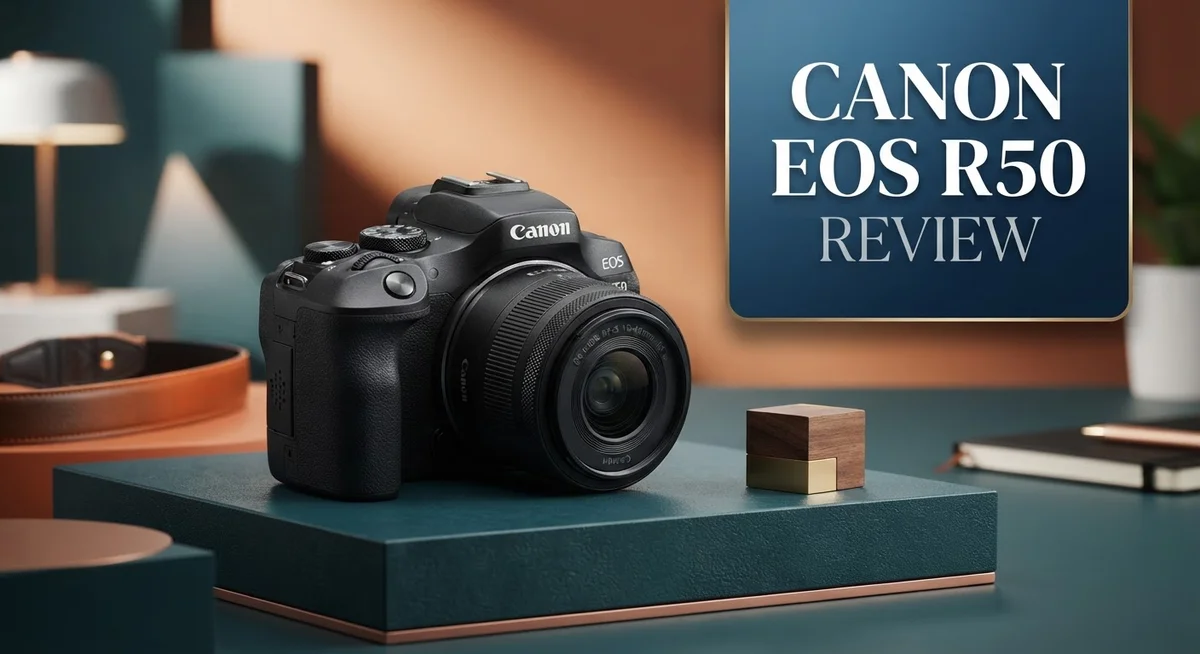
The Canon EOS R50 is a small camera with big ambitions. It fits easily in your hand. But it still packs a punch for photos and video.
This camera uses a 24.2MP APS-C sensor. It pairs with the powerful DIGIC X processor. Together, they capture sharp, clean images even in tricky light.
Are you a vlogger? A travel shooter? A beginner who wants to grow? The R50 fits many needs. It shoots uncropped 4K video at 30fps. It also handles fast Full HD action up to 120fps.
We tested the R50 across real world situations. We checked its handling, image quality, and video performance. This review breaks down everything you need to know.
Curious if this mirrorless camera deserves a spot in your bag? Let’s dive into the details and find out together.
In a Nutshell
Here’s what you need to know about the Canon EOS R50 in short:
- The DIGIC X processor powers fast image processing. It handles autofocus and video tasks with ease.
- Video shooters get 4K recording with 6K oversampling. Footage stays uncropped even at 30fps for sharp results.
- Full HD footage runs up to 120fps. This gives smooth slow motion for action clips.
- Dual Pixel autofocus tracks subjects with precision. Eyes and faces stay sharp in most conditions.
- The touchscreen responds fast to taps and swipes. Menu navigation feels smooth and simple.
- Canon placed the viewfinder in a better spot than Sony rivals. This makes eye level shooting more comfortable.
- One drawback stands out: the RF mount lens lineup feels limited right now. Buyers may need patience as Canon expands options.
- Photo quality impresses with low noise levels. Images stay clean even in tricky light.
This camera blends strong photo performance with solid video tools. It works well for creators who want both stills and clips in one body.
Sensor and Image Quality
The sensor inside the R50 handles light with surprising grace. Its 24.2MP APS-C CMOS chip captures fine detail across a wide range of shooting conditions. You’ll notice clean files even when you push the ISO higher than usual.
The DIGIC X processor works behind the scenes to keep noise minimal. This means your images stay sharp and smooth, whether you shoot in bright daylight or dim indoor spaces. The processor also speeds up image writing to your card, so you won’t wait long between shots.
Color reproduction feels natural and pleasing straight from the camera. Skin tones render warmly without looking artificial. Landscapes show vibrant greens and blues that match what your eyes see. You can tweak colors further in post-processing if you want, but most users find the default output satisfying.
Dynamic range performs well for an APS-C sensor in this class. Shadow areas retain detail without appearing crushed. Highlights stay controlled in most scenes. This balance gives you more flexibility when editing your photos later.
The sensor’s size matters too. The APS-C format sits between full frame and compact sensors. You get excellent image quality while keeping the camera body small enough to carry daily. This makes the R50 practical for travel and street photography.
Low light shooting reveals both strengths and limits. The sensor gathers plenty of light thanks to the fast autofocus system. At ISO 3200, images remain very usable. Push beyond ISO 6400 and noise becomes visible, though it stays manageable for social media or small prints.
Macro work shows the sensor’s resolution clearly. Fine textures and small details emerge crisply when you use quality lenses. The 24.2MP count gives you room to crop without losing sharpness.
The R50’s sensor delivers consistent, reliable image quality. It won’t feel limiting for most photographers. Whether you shoot portraits, landscapes, or events, this sensor provides the foundation for excellent results. The real magic happens when you pair it with good glass and proper technique.

- Includes Versatile 18–45mm Lens: Covering wide to standard focal lengths, this compact...
- Oversampled 4K with Dual Pixel AF: Enjoy sharp, smooth footage with reliable subject...
Last update on 2026-11-12 / Affiliate links / Images from Amazon Product Advertising API
Design and Build Quality
The Canon EOS R50 feels light in your hands. This compact mirrorless camera weighs just enough to feel solid without exhausting your arms during long shoots. The body measures 116.3 x 89.5 x 84.4mm, making it one of the smallest APS-C mirrorless options available today.
The grip sits naturally in your palm. Your fingers wrap around the textured rubber without slipping. The camera body uses a mix of magnesium alloy and plastic materials. This combination keeps weight down while maintaining durability for everyday use.
The button layout makes sense. Canon placed controls where your thumb and fingers naturally rest. The mode dial sits on top with easy rotation. The shutter button has a satisfying half-press feel. Menus respond instantly to your touch on the 3-inch screen.
The touchscreen is genuinely responsive. You can tap to focus, swipe through images, and adjust settings without lag. The screen flips upward for vlogging and selfies, a feature many travel shooters appreciate. Brightness adjusts automatically in sunlight, though you may need to shade it in very bright conditions.
The build quality feels premium for the class. Seams align properly. Buttons don’t rattle. The battery door closes with a confident click. Canon didn’t cut corners on assembly.
One thing to note: this camera lacks weather sealing. You should avoid heavy rain or dusty environments. It’s fine for light drizzle and typical outdoor work, but not rugged enough for harsh conditions.
The RF mount connects lenses with a satisfying mechanical feel. The mount itself feels robust and well machined. Lenses attach and detach smoothly without wobble.
The viewfinder sits higher on the body than many competitors. This positioning feels more natural when you hold the camera to your eye. Your nose doesn’t bump the screen as easily during shooting.
Overall, the R50 prioritizes portability without sacrificing build integrity. It’s a camera designed for photographers who move frequently and value comfort over ruggedness. The compact size makes it ideal for travel, street work, and content creation.
Autofocus and Performance
The Canon EOS R50 brings Dual Pixel autofocus to the table. This system tracks moving subjects with impressive speed and accuracy. You get fast, reliable focus whether you shoot photos or video.
Autofocus performance shines in real world conditions. The camera locks onto faces and eyes quickly. It maintains focus as subjects move across the frame. The system works well in good light and holds up reasonably in dim environments.
The DIGIC X processor keeps everything running smoothly. Image processing happens fast. Burst shooting feels snappy and responsive. You won’t experience frustrating delays between shots or during playback.
Continuous autofocus performs well during video recording. The R50 tracks motion without hunting or losing lock. Transitions between subjects feel natural. This makes the camera suitable for vlogging, interviews, and event footage.
One strength stands out: the autofocus system rarely misses. It prioritizes accuracy over speed, which works in your favor. You spend less time chasing focus and more time capturing moments.
The touchscreen adds another layer of control. You can tap to set focus points anywhere in the frame. This speeds up composition and lets you work intuitively. Swipe gestures feel responsive and quick.
Performance in challenging light shows both strengths and limits. The autofocus system works competently in moderate indoor lighting. Very dark environments demand more patience. The camera still focuses, but it takes slightly longer to lock on.
For video work, the autofocus keeps pace with most situations. Panning across scenes feels smooth. The focus doesn’t hunt or rack unnecessarily. This reliability matters when you can’t afford focus mistakes during recording.
The R50’s autofocus system delivers consistent performance across different shooting scenarios. Photographers and videographers alike benefit from its speed and accuracy. The combination of Dual Pixel technology and the DIGIC X processor creates a responsive, capable autofocus experience. This performance level punches above what you might expect at this segment of the market.
Top 3 Alternatives
Nikon Z30

- Designed for creators, vloggers and streamers: Nikon's easy to use Z 30 mirrorless 4K...
- Pro-grade video quality: Crisp 4K resolution, autofocus with eye tracking for people and...

Last update on 2026-11-12 / Affiliate links / Images from Amazon Product Advertising API
The Nikon Z30 offers excellent video features for content creators. This camera delivers sharp 4K footage with effective autofocus. The compact design makes it easy to carry around. You get reliable performance in various lighting conditions. The battery life performs well during extended shoots. The interface feels intuitive for beginners and experienced users alike.
Sony A6400
No products found.
The Sony A6400 stands out with impressive autofocus speed. This camera tracks moving subjects with remarkable accuracy. The compact body fits comfortably in your hands. You can shoot in low light without excessive noise. The electronic viewfinder provides real-time exposure preview. Fast continuous shooting captures quick moments effortlessly. The lens selection available for this system is extensive.
Fujifilm X-S20
No products found.
The Fujifilm X-S20 brings distinctive color science to your photos. This camera produces warm, pleasing tones straight from the sensor. The film simulation modes let you apply classic looks instantly. The build quality feels solid and premium. The autofocus performs quickly across the frame. You get good battery life per charge. The retro design appeals to photographers who value aesthetics alongside performance.
Each option serves different needs. The Nikon Z30 excels for video work. The Sony A6400 shines with autofocus performance. The Fujifilm X-S20 delivers unique image character. Your choice depends on what matters most for your photography style.
Video Capabilities and 4K Recording
The Canon EOS R50 captures video in 4K at 30fps using a 6K oversampling technique. This approach pulls footage from a larger area of the sensor, then shrinks it down to 4K resolution. The result is a sharper, cleaner 4K image compared to standard 4K capture.
The oversampling method also eliminates the crop you’d normally see. You get the full width of the sensor without any narrowing of your field of view. This matters when you’re shooting with wide angle lenses or trying to fit more into your frame.
Full HD recording reaches 120fps, which opens doors for slow motion work. You can slow footage to 50% or 25% speed and still maintain smooth playback. This feature works well for action sequences, sports, or any moment you want to stretch out in time.
The camera uses Dual Pixel autofocus during video recording. The system tracks moving subjects with solid accuracy. Continuous focus pulls smoothly between subjects without jarring transitions. You won’t experience the hunting or hunting behavior that plagues some competitors.
One honest note: the 4K video quality sits in the “good” category rather than “exceptional.” Colors look natural, and the oversampling helps with detail retention. However, don’t expect the video output to match higher end cinema cameras. The R50 handles standard content creation tasks well. Vlogging, travel videos, and event coverage all work smoothly.
The camera records to SD UHS II cards. Write speeds matter here, so use cards rated V60 or faster to avoid dropped frames. The R50 won’t overwhelm your storage with massive file sizes, making it practical for travel and longer shoots.
Video stabilization works in software, not through in body mechanisms. You’ll notice some wobble during handheld pans. Using a tripod or gimbal produces noticeably cleaner results. Many creators pair this camera with affordable stabilization tools to smooth out movement.
The autofocus performance during video stands as a genuine strength. The R50 keeps pace with faster moving subjects. This reliability makes it a solid choice for content creators stepping into mirrorless video work.
Lens Ecosystem and RF-Mount Compatibility
The Canon EOS R50 uses the RF mount system. This mount opens access to Canon’s growing lens library. RF lenses offer modern optical designs and fast autofocus integration with the camera body.
Canon currently offers around 30 RF mount lenses. This selection includes wide angles, standard zooms, and telephoto options. The RF 24-50mm f/4.5-6.3 IS STM comes as a kit lens. It provides solid everyday coverage for most shooting situations. The RF 50mm f/1.8 STM delivers excellent sharpness at an accessible price point.
For photographers wanting telephoto reach, the RF 70-200mm f/2.8L IS USM exists. Fast aperture lenses like the RF 85mm f/1.2L USM suit portrait work. Wide angle shooters can choose the RF 16-35mm f/2.8L IS USM. Each lens connects seamlessly with the R50’s autofocus system.
The RF mount ecosystem continues expanding regularly. Canon releases new lenses multiple times per year. This growth means your investment in the system gains more options over time. The mount’s electronic contacts allow lenses to communicate with the camera instantly.
One consideration: RF mount lenses tend toward premium positioning compared to older EF mount options. However, the optical performance justifies this approach. RF lenses feature modern coatings and construction techniques. They autofocus quickly and accurately on the R50’s sensor.
Adapter availability matters too. Canon sells the EF to RF adapter. This lets you use older Canon EF lenses on your R50. Autofocus still works with most adapted lenses. Manual focus lenses also mount without issues.
Third party RF mount lenses are emerging. Sigma and Tamron now produce RF mount options. These alternatives provide additional choices at different price points. The ecosystem supports both Canon native glass and third party solutions.
The RF mount represents Canon’s future direction. The R50 positions you within this modern system. Your lens investments work across other RF mount bodies like the R5, R6, and R7. This forward compatibility matters for long term camera ownership. The mount feels solid mechanically and performs reliably in daily use.
Pros and Cons
Pros
- Ultra-compact design makes it easy to carry for travel and daily shooting
- Autofocus system rarely misses, even in challenging lighting conditions
- 24.2MP sensor produces clean images with low noise levels
- Responsive touchscreen gives you quick access to settings and menu options
- 120fps Full HD recording opens creative slow motion possibilities
Cons
- RF mount lens selection remains limited compared to older Canon EF systems
- 4K video quality ranks as good rather than exceptional for professional work
- Software-based video stabilization cannot match in-body stabilization found on competitors
- Premium pricing on RF lenses means higher costs for expanding your system
Who Should Buy It
The Canon EOS R50 works best for specific types of photographers. Let’s break down who gets the most from this camera.
Content creators and vloggers benefit significantly from this camera. The 120fps Full HD recording lets you capture smooth slow motion clips. Dual Pixel autofocus tracks your movement reliably during video work. The compact body fits easily into a backpack or camera bag for on location shoots.
Travel photographers find this camera appealing. The small form factor means less weight on your shoulders during long days exploring new places. The touchscreen responds quickly when you need to adjust settings fast. Autofocus rarely misses, even when you’re shooting in dim lighting conditions or moving between bright and dark environments.
Beginners stepping into mirrorless systems should consider this option. The camera feels intuitive to handle. Menu navigation works smoothly on the responsive display. You get professional image quality without overwhelming complexity. The learning curve stays manageable compared to professional grade cameras.
Photography students and enthusiasts gain real value here. The 24.2MP sensor produces clean images with low noise levels. You can print large without visible grain. The Dual Pixel autofocus system teaches you proper focusing techniques. Experimenting with manual controls feels natural on this body.
Hybrid shooters who blend photos and video find this camera versatile. You shoot stills with solid autofocus performance. You switch to video mode and maintain reliable tracking. The 4K recording quality suits social media and online content, even if professional cinema work demands something different.
RF mount enthusiasts already invested in Canon’s newer lens system appreciate this body. You expand your lens collection without buying into older EF mount technology. The camera future proofs your investment.
This camera is NOT ideal for professional videographers requiring exceptional 4K quality or in body stabilization. It’s also not the best choice if you need extensive RF mount lens variety right now. Sports photographers needing extreme zoom capabilities should explore other options.
Final Verdict
The Canon EOS R50 proves itself as a smart pick for anyone stepping into mirrorless photography. It blends simplicity with strong performance in one small body.
This camera handles everyday shooting with confidence. You get reliable autofocus and clean image quality without a steep learning curve.
Canon built the R50 for people who want results without fuss. The menu system stays intuitive. Settings feel logical even for first time mirrorless users.
Image quality holds up well against pricier competitors in casual and semi-professional settings. Colors look natural straight out of camera. Skin tones render nicely for portraits and vlogs.
The compact body never feels like a burden. You can carry it all day without shoulder strain or bulky gear bags. That matters for anyone who shoots often and travels light.
Compared to the Sony A6400 or Nikon Z50 II, the R50 holds its ground in autofocus reliability and touchscreen response. Canon clearly focused on user experience here.
Where this camera falls short is video depth. Serious videographers may find the footage good but not outstanding for demanding projects. That gap becomes obvious in low light or fast motion scenes.
Still, most buyers won’t push the R50 into those extreme scenarios. Everyday shooters get more than enough quality and flexibility for their needs.
If you want a mirrorless camera that grows with you, the R50 delivers. It suits learning curves well and rewards practice with sharper results over time.
Canon’s decision to keep things simple pays off here. You are not lost in menus or confused by options. The camera stays out of your way and lets you focus on shooting.
For hybrid creators, students, and travel photographers, this camera checks the right boxes. It rewards casual use and rewards patience for those wanting to grow their skills.
Final thought: the Canon EOS R50 earns its spot as a dependable, easy to use mirrorless camera. It fits a wide range of everyday photography and video needs without overcomplicating the process.
Frequently Asked Questions
Does the Canon EOS R50 have in-body image stabilization?
No, it does not. The R50 relies on software-based stabilization instead. This works well for photos and everyday video. However, if you shoot handheld in low light or need professional-grade video stability, you may want to look at competitors that offer in-body stabilization.
Can I use older Canon lenses on the R50?
Not directly. The R50 uses the RF mount, which is Canon’s newer system. Your older EF lenses will not fit without an adapter. Canon does make adapters, but they add extra cost and bulk to your kit. If you already own EF lenses, this is worth considering before you buy.
How does the R50 compare to the Sony A6400?
Both are excellent compact mirrorless cameras. The R50 has a better viewfinder position and a more responsive touchscreen. The Sony offers stronger video performance and a larger lens selection. For autofocus reliability and ease of use, the two cameras are very close. Your choice depends on whether you prefer Canon’s RF ecosystem or Sony’s E-mount options.
Is the R50 good for video work?
It handles Full-HD and 4K recording well for content creation and vlogging. The 120fps Full-HD option gives you creative slow-motion choices. However, 4K quality is good rather than exceptional. If you need professional-level 4K output or advanced video features, this camera may not be your best fit.
Who should buy the Canon EOS R50?
This camera suits travel photographers, beginners moving to mirrorless, and content creators who want a compact, responsive body. It grows with you as your skills improve. It is not ideal for professionals who demand top-tier 4K video or specialized features.

I’m Lipi, a passionate blogger with a keen interest in artificial intelligence and its applications. On my blog, lipiai.blog, I share information about AI, review different AI tools, and provide helpful guides. My goal is to make AI easy to understand for everyone. I enjoy simplifying complex ideas so that both beginners and tech-savvy folks can learn.