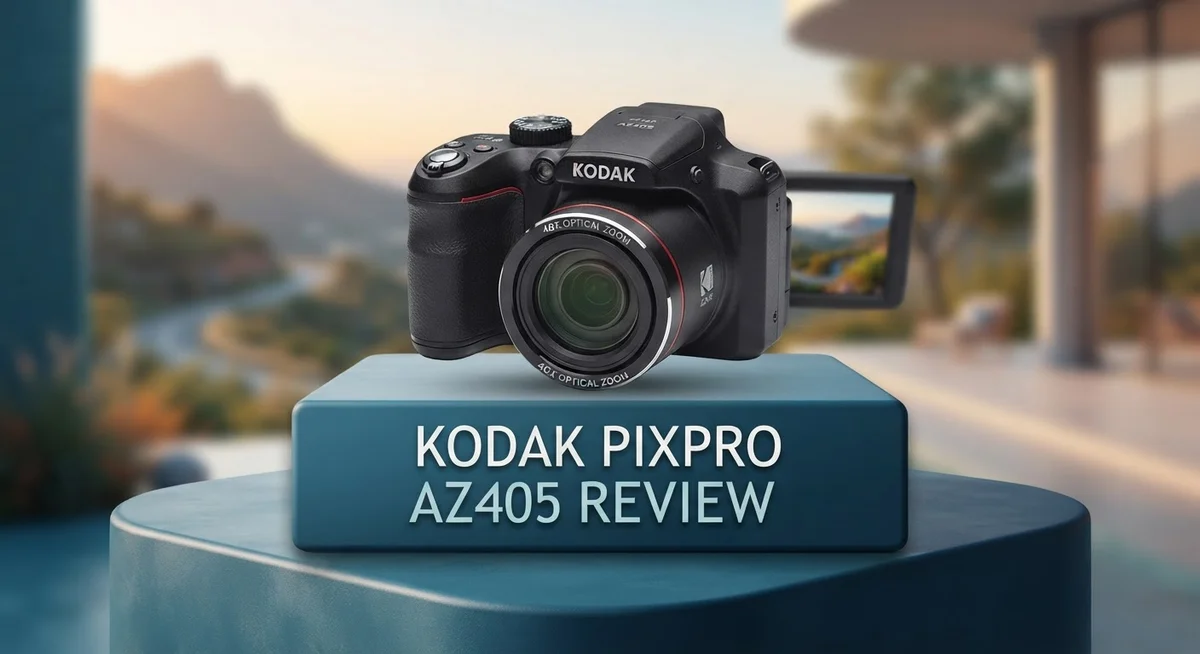
Kodak PixPro AZ405 Review: Is It Worth The Hype?
Are you searching for a camera with a huge zoom range? The Kodak PixPro AZ405 might catch your eye. It packs a 40x optical zoom into a compact bridge camera body.
This camera promises big reach for wildlife, sports, and travel shots. It also offers a 20MP sensor and optical image stabilization. Sounds impressive on paper, right?
But does it perform well in real life? Many bridge cameras struggle to balance zoom power with image quality. We tested the AZ405 to find out if it beats that common problem.
In this review, we cover everything you need to know. We look at design, performance, image quality, and video capability. We also compare it to rivals like the Canon PowerShot SX70 HS.
Is this camera a smart pick for casual shooters? Or does it fall short when the zoom gets pushed to its limit? Stick with us. We break down the pros and cons of the AZ405 in simple terms.
By the end, you will know exactly who this camera suits best. Let’s get started.
In a Nutshell
Here is the quick rundown on the Kodak PixPro AZ405 before you dive deeper into this review.
-
Massive reach, mixed results: The zoom lets you get close to distant subjects. But sharpness drops once you push past the mid range.
-
Handling feels natural: The grip sits well in your hand. Buttons are easy to find, even for beginners.
-
Battery life is a win: AA batteries mean you never get stuck without power. Swap them anywhere, anytime.
-
Performance lags behind rivals: Autofocus and shot to shot speed feel sluggish. Fast action can slip past you.
-
Screen struggles outdoors: Bright sunlight makes the display hard to see. Framing shots outside takes extra effort.
-
Best suited for casual use: This camera works fine for backyard birds or family events. Serious photographers may want to look elsewhere.
Overall, the AZ405 delivers zoom power without matching image quality. It fits shooters who prioritize reach over refinement.
Optical Zoom and Focal Range
The 40x optical zoom sits at the heart of what makes the AZ405 interesting. This focal range spans from 24mm wide angle all the way to 960mm in telephoto mode. You get genuine optical magnification, not digital stretching that ruins photos.
The 24mm wide angle starting point helps you capture expansive landscapes without stepping backward. This works well for travel shots where you want context and scenery. Then the zoom kicks in hard for distant subjects like birds, wildlife, or sports action.
Real world performance tells a different story than the spec sheet promises. The camera struggles most when you push past 30x magnification. Focus becomes soft and mushy. Details blur even when you hold the camera perfectly still. The optical image stabilization helps, but it cannot fix the fundamental optical limits at extreme zoom levels.
Many users report that shots look sharp through the viewfinder but appear disappointing on screen. This gap between what you see and what you capture frustrates owners. The telephoto end simply does not deliver the crisp results you might expect from such an aggressive zoom.
The wide angle performs better than the telephoto extreme. You get usable sharpness from 24mm up to around 200mm equivalent. Beyond that point, image quality drops noticeably. Contrast fades. Fine details vanish.
For casual shooting, the zoom range feels generous. You can photograph your grandchild’s soccer game from the sidelines. You can capture birds at your feeder without getting too close. You can frame a sunset with interesting foreground elements. These everyday scenarios work fine.
The zoom mechanism itself operates smoothly. The lens extends and retracts without stuttering. Focus hunting happens occasionally, especially in low light. The autofocus speed lags behind modern competitors, so you might miss quick moments.
Bottom line: The 40x zoom gives you reach that costs less than many alternatives. Just understand that extreme telephoto results look soft and lack the punch you want. The AZ405 shines when you stay within the 24mm to 200mm sweet spot. Push harder, and compromises become obvious.

- This Bundle Includes: Kodak Pixpro AZ405 Digital Camera in Black, 64 GB Memory Card...
- 40x Optical Zoom: Wide 24-960mm equivalent focal range for capturing everything from...
Last update on 2026-11-08 / Affiliate links / Images from Amazon Product Advertising API
Image Quality and Sensor Performance
The 20MP CMOS sensor forms the foundation of the AZ405’s imaging system. This sensor captures light across a moderate resolution that works well for prints up to 11×14 inches. Most casual shooters find this megapixel count sufficient for everyday photography.
Optical image stabilization (OIS) helps reduce camera shake during handheld shooting. This feature becomes especially useful when you extend the zoom to its maximum reach. Without OIS, distant subjects would appear blurry due to even tiny hand movements. The system works reasonably well in moderate lighting conditions.
Real world sensor performance reveals the camera’s true strengths and weaknesses. At the 24mm wide angle setting, images show decent detail and color accuracy. Shots taken in daylight look crisp and well exposed. The sensor handles standard indoor lighting adequately when you use the scene detection mode.
The situation changes dramatically at telephoto extremes. Beyond 20x zoom, image quality drops noticeably. Users report that distant subjects appear soft and lack sharpness. Noise becomes visible in shadows even at moderate ISO levels. The sensor struggles to maintain detail when the zoom pushes past 30x magnification.
Low light performance lags behind competing bridge cameras. The AZ405 needs bright conditions to produce clean images. In dim rooms or evening outdoor settings, noise becomes distracting. The 1080p video output suffers from the same limitations as still photos.
The 3 inch LCD screen displays images at 460K pixels. This resolution feels dated compared to modern standards. Colors appear reasonably accurate, though contrast shifts depending on your viewing angle. The screen’s biggest flaw emerges in bright sunlight, where visibility drops significantly.
Dynamic range performance is average at best. Bright skies often blow out to pure white while foreground details disappear into shadow. The camera lacks the processing power to recover detail from these extreme conditions. Exposure bracketing could help, but the slow operation makes this workflow tedious.
For casual backyard photography and family events, sensor performance proves acceptable. Travel and wildlife photographers should expect compromises at maximum zoom. The sensor delivers what you’d expect at this performance tier, nothing more.
Design, Build Quality, and Ergonomics
The Kodak PixPro AZ405 wraps its 40x zoom engine in a bridge camera body that feels solid in your hands. The design prioritizes grip comfort over flashy aesthetics. Your fingers rest naturally on the chunky grip, and the camera sits stable even during extended shooting sessions.
Build quality stands up to casual use. The plastic chassis shows no obvious flex or creaks during normal handling. Buttons and dials respond with satisfying clicks. The zoom ring rotates smoothly from 24mm wide angle all the way to the telephoto extreme. Nothing feels cheap or fragile, though this camera clearly targets everyday photographers rather than professionals.
Ergonomics work well for most users. The grip diameter accommodates both large and small hands without forcing awkward positions. The shutter button sits exactly where your index finger naturally lands. Mode dials and menu buttons cluster logically on the back panel. You won’t fumble around searching for controls during important moments.
The camera’s compact footprint makes it genuinely portable. It slides into a standard camera bag without dominating your pack. Weight stays reasonable thanks to the plastic construction. AA battery compatibility means you can grab fresh power from convenience stores anywhere, eliminating the dead battery anxiety that plagues cameras with proprietary cells.
The 3 inch LCD screen feels cramped compared to modern standards. At 460K pixels, the display shows adequate detail for composition and basic review. However, bright sunlight renders the screen nearly invisible. You’ll struggle to confirm focus or check exposure in outdoor conditions. The lack of an electronic viewfinder compounds this problem.
The overall design philosophy emphasizes practicality over premium feel. This camera doesn’t pretend to be a professional tool. Instead, it delivers a straightforward package that handles basic photography tasks. The sturdy construction suggests the AZ405 will survive drops and bumps better than flimsy alternatives. For photographers who prioritize function over form, the design delivers exactly what you need.
Top 3 Alternatives
Nikon COOLPIX B500

- 16 megapixel 1/2.3 inches BSI CMOS sensor
- Nikkor f/3.0 6.5 millimeter ED lens
Last update on 2026-11-08 / Affiliate links / Images from Amazon Product Advertising API
The Nikon COOLPIX B500 offers excellent zoom capabilities for wildlife and sports photography. This camera features a 40x optical zoom lens that captures distant subjects with clarity. The 16-megapixel sensor delivers sharp images in various lighting conditions.
You’ll appreciate the fast autofocus system that locks onto moving subjects quickly. The camera includes built-in WiFi, so sharing photos to your phone happens instantly. Battery life extends up to 500 shots per charge, making it reliable for full-day outings.
The B500 provides manual controls for creative photographers. You can adjust aperture, shutter speed, and ISO independently. The electronic viewfinder shows real-time exposure information before you shoot.
Canon PowerShot SX540

Last update on 2026-11-08 / Affiliate links / Images from Amazon Product Advertising API
The Canon PowerShot SX540 combines powerful 50x optical zoom with user-friendly controls. This camera excels at capturing detail from far away without sacrificing image quality. The 20.3-megapixel sensor produces vibrant colors and excellent contrast.
Canon’s intelligent IS (Image Stabilization) system keeps footage smooth and photos sharp. You get built-in WiFi and NFC technology for seamless smartphone connectivity. The articulating screen lets you shoot from creative angles.
The SX540 includes advanced shooting modes like high-speed burst capture. You can record Full HD video with stereo sound. Manual mode gives experienced photographers complete creative freedom.
Sony Cyber-shot HX400
No products found.
The Sony Cyber-shot HX400 delivers impressive 50x optical zoom performance. This camera features a 20.1-megapixel Exmor R sensor that performs exceptionally well in low light. The Zeiss lens provides outstanding optical quality.
Sony’s SteadyShot technology prevents camera shake during handheld shooting. You get WiFi connectivity for instant photo sharing. The high-resolution OLED viewfinder shows accurate color reproduction.
The HX400 captures Full HD video with clear audio. Manual controls allow photographers to adjust settings precisely. The compact design makes travel photography convenient without sacrificing features.
Video Capabilities and Stabilization
The AZ405 shoots video at 1080p Full HD resolution. This captures clear footage for everyday recording tasks. The camera handles frame rates smoothly for standard playback.
Optical image stabilization (OIS) makes a real difference when you’re filming handheld. The system reduces camera shake during pans and walks. You’ll notice steadier video compared to cameras without this feature. The OIS works best at wider zoom ranges. Performance drops noticeably when you push toward the 40x telephoto extreme.
Video autofocus tracks moving subjects reasonably well. The camera includes object tracking features that follow your subject across the frame. This helps keep people or animals in focus during dynamic scenes. Response times feel adequate for casual video work.
Low light video performance mirrors the still image struggles. Footage becomes grainy and loses detail in dim conditions. You need bright, natural light to get clean video output. Outdoor daytime recording produces the best results.
The 1080p output records to standard video files. Playback works on most computers and televisions without conversion. The frame rate remains consistent throughout recording sessions. Battery life during video mode drains faster than still shooting, so bring spare AA batteries if you plan extended recording.
The stabilization system truly shines during moderate zoom levels. Handheld pans feel smooth and professional looking. Switch to maximum zoom and the benefit diminishes. The camera struggles to keep telephoto footage steady even with OIS active.
Audio recording captures sound through a built in microphone. Quality remains basic but functional for documenting events. Wind noise becomes apparent during outdoor recording. External microphone support would improve video capabilities, but the AZ405 doesn’t offer this option.
Overall, the video features work for casual recording and travel documentation. Don’t expect cinema quality footage. The stabilization system prevents the worst shaking problems. For family events, vacations, and general video capture, the AZ405 delivers acceptable results. Serious videographers should look elsewhere.
Battery Life and Power Management
The Kodak PixPro AZ405 runs on AA batteries, which means you can find replacements almost anywhere. This is a real advantage when you’re traveling or shooting in remote locations. You won’t need special rechargeable packs or proprietary chargers.
AA batteries give you flexibility that built in lithium cells cannot match. Gas stations, convenience stores, and hotels all stock them. This makes the AZ405 practical for extended trips where you cannot access charging outlets.
Battery performance depends heavily on your shooting habits. Continuous autofocus drains power faster than manual focus mode. Using the LCD screen constantly consumes more energy than using the electronic viewfinder. The zoom motor also demands significant power, especially when you’re constantly adjusting focal length.
Real world battery life typically ranges from 200 to 300 shots per set of AA batteries. This assumes normal shooting conditions with moderate flash use. Heavy video recording or constant zooming will reduce this number substantially. The camera’s slow processing speed actually helps battery longevity since the processor isn’t working overtime.
Power management features are fairly basic. The AZ405 offers an auto off timer that kicks in after several minutes of inactivity. This helps preserve battery life when you forget to turn off the camera. You can adjust the timeout duration through the menu system.
Cold weather significantly impacts battery performance. Alkaline AA batteries lose power faster in freezing temperatures. Rechargeable NiMH batteries handle cold better than standard alkalines, so consider bringing those if you’re shooting in winter conditions.
The camera accepts both alkaline and rechargeable AA batteries without any modifications. Many users prefer rechargeable options for regular shooting to save money over time. The flexibility to choose your battery type is genuinely useful.
Battery compartment access is straightforward and doesn’t require tools. You can swap batteries quickly without removing the camera from your bag. The design prioritizes convenience for field use, which matters when you’re out taking photos all day.
Pros and Cons
Pros
- 40x optical zoom fits into a compact bridge camera body you can actually carry
- Chunky grip makes the camera comfortable to hold for extended shooting sessions
- AA battery system means you find replacements at any convenience store or gas station
- Scene detection and object tracking help you capture moments without fiddling with manual settings
- Optical image stabilization keeps handheld video smooth during moderate zoom levels
Cons
- Image quality drops noticeably when you push the zoom to maximum telephoto range
- Camera operates slowly, which frustrates you when you need to capture fast moving subjects
- LCD screen becomes hard to read under bright sunlight, making composition difficult outdoors
- Focus softens toward the telephoto end, leaving your distant shots looking fuzzy and unclear
Who Should Buy It
The Kodak PixPro AZ405 works best for casual photographers who value zoom power. You’ll appreciate this camera if you want a compact bridge camera that fits in your travel bag without weighing you down.
This camera suits travel enthusiasts and nature observers. The 40x optical zoom lets you capture distant subjects without changing lenses. You can photograph wildlife, landscapes, and events from where you stand. The compact body makes it easy to pack for vacations or day trips.
Beginners find the AZ405 approachable. Scene detection and object tracking handle much of the technical work for you. You don’t need to master manual settings to get acceptable shots. The camera guides you toward decent results automatically.
The AZ405 appeals to video enthusiasts on a casual level. The 1080p video recording and optical image stabilization work fine for travel vlogs and family moments. Handheld video stays reasonably smooth during moderate zoom levels. You can document your adventures without professional gear.
Battery flexibility makes this camera attractive to remote travelers. AA batteries are available everywhere. You won’t struggle to find replacements in small towns or convenience stores. You can carry spares without buying special chargers. Both alkaline and rechargeable AA batteries work perfectly.
The chunky grip design benefits people with larger hands. Extended shooting sessions feel comfortable. You can hold the camera steady for longer periods without hand fatigue.
Skip this camera if you demand professional image quality. The photos soften noticeably at maximum zoom. Low light performance disappoints. Fast action shots frustrate because the camera operates slowly. The LCD screen washes out in bright sunlight, making it hard to see your shots.
Serious photographers should look elsewhere. The Canon PowerShot SX70 HS offers better overall performance. The Panasonic FZ series provides superior image quality on the used market.
The AZ405 works perfectly for people who prioritize zoom reach and portability over image sharpness. You get tremendous zoom capability in a bag friendly package. Just accept that image quality won’t match premium cameras. This camera delivers exactly what casual users need.
Final Verdict
The Kodak PixPro AZ405 delivers exactly what its design promises. You get a long zoom lens in a body you can carry without strain. This balance defines the entire camera experience.
Image quality remains the biggest tradeoff you accept. Photos look fine in good light at shorter zoom ranges. Push the lens to its limit, and softness creeps into every shot.
Performance speed also tests your patience. The camera takes noticeable time to focus and process images. Fast action scenes often slip past before the shutter fires.
Build quality surprises many buyers. The frame feels solid in your hands. Controls sit in logical places, so operation feels intuitive even for first time users.
Comparisons with the Canon PowerShot SX70 HS show where the AZ405 stands. Canon offers sharper images and quicker autofocus. Kodak counters with simpler controls and easier battery access.
Other Kodak models like the AZ425 and AZ528 add features this camera skips. Yet the AZ405 keeps things simple for buyers who want straightforward operation without extra menus.
Who should buy this camera? Anyone who wants massive zoom reach without carrying heavy gear fits this profile. People who shoot mostly outdoors in daylight get the best results.
Who should avoid it? Photographers who print large images or crop heavily will notice quality limits fast. Anyone chasing sharp low light photos should look toward other systems entirely.
Think about your typical shooting scenario before deciding. Casual snapshots, family gatherings, and wildlife spotting all suit this camera well. Professional portfolios or detailed prints do not.
The AZ405 succeeds at its core mission. It puts extreme zoom power into hands that might otherwise never afford that reach. That accessibility matters more than perfect image quality for many casual shooters.
Choose this camera when convenience and reach outweigh pixel perfect results. Skip it when image sharpness tops your priority list. Your shooting style decides which side wins.
Frequently Asked Questions
Does the Kodak PixPro AZ405 work well for wildlife photography?
The AZ405 handles casual wildlife shots reasonably well thanks to its 40x optical zoom. You can frame distant animals without moving closer. However, image quality drops significantly at maximum telephoto range, so sharpness becomes soft when you push the zoom all the way out.
Object tracking helps you keep moving subjects centered in the frame. This feature reduces the need for constant manual adjustments. The optical image stabilization keeps video steady during moderate zoom levels, which is useful for capturing wildlife behavior.
For serious wildlife work, the image quality limits matter. You’ll notice grain and loss of detail in telephoto shots. Casual nature observers find the AZ405 satisfying. Professional wildlife photographers should explore other options.
Can you use regular AA batteries in this camera?
Yes. The AZ405 runs on AA batteries, which means you find replacements anywhere. Gas stations, convenience stores, and supermarkets stock AA batteries constantly. This flexibility makes the camera perfect for remote travelers who can’t rely on charging outlets.
You won’t need special proprietary batteries or chargers. This approach keeps your travel gear simple and reduces the weight you carry. Battery availability is a genuine advantage for this camera.
How does the LCD screen perform in sunlight?
The 3 inch LCD has 460K pixels, which sounds decent on paper. In practice, the screen becomes difficult to read in bright outdoor light. You’ll struggle to see your subject clearly when shooting in direct sun.
This limitation affects your ability to frame shots accurately outdoors. The screen works fine indoors or on cloudy days. If you shoot frequently in bright conditions, expect some frustration.
Is the Kodak PixPro AZ405 better than the Canon PowerShot SX70 HS?
These cameras target different priorities. The AZ405 emphasizes zoom reach and portability in a lightweight package. The Canon PowerShot SX70 HS offers superior image quality and faster performance, though it’s larger and heavier.
Choose the AZ405 if zoom power matters most to you. Choose the Canon if image sharpness and speed are your priorities. Your specific needs determine which camera serves you better.

I’m Lipi, a passionate blogger with a keen interest in artificial intelligence and its applications. On my blog, lipiai.blog, I share information about AI, review different AI tools, and provide helpful guides. My goal is to make AI easy to understand for everyone. I enjoy simplifying complex ideas so that both beginners and tech-savvy folks can learn.