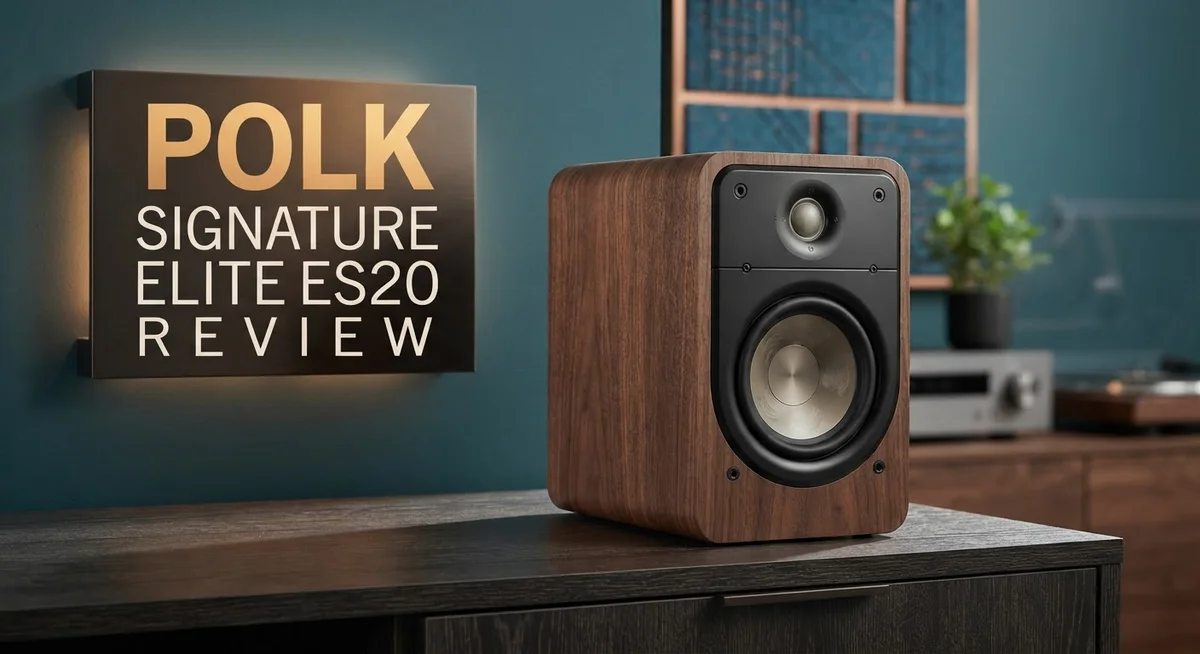
Polk Signature Elite ES20 Bookshelf Speaker Review: Worth The Price?
Looking for speakers that fill a room with clean, detailed sound? The Polk Signature Elite ES20 might be your answer. This bookshelf speaker pair brings big performance in a compact size.
Polk built these speakers with a 1″ terylene tweeter and a 6.5″ woofer. Together, they create a smooth and balanced sound. You get punchy midbass and crisp highs without much effort.
The ES20 is Hi Res Audio Certified. It also supports Dolby Atmos and DTS:X. This means your movies and music get extra depth and clarity.
Polk’s Dynamic Balance acoustic array helps every note stay clear and precise. Their Power Port bass technology adds punch to your favorite tracks. You get a wide soundstage that fills any room with sound.
In this review, we break down what makes the ES20 shine. We also cover where it falls short. By the end, you will know if these speakers fit your home setup.
In a Nutshell
Here’s the quick rundown on the Polk Signature Elite ES20:
- Room-filling sound: These speakers create a wide, spacious soundstage that fills any room with ease.
- Smart bass tech: Polk’s Power Port bass technology delivers punchy midbass without sacrificing clarity.
- Home theater ready: The ES20 supports Dolby Atmos and DTS:X, so your movies and shows sound immersive.
- Precision engineering: Precision crossovers keep the sound smooth and balanced across all frequencies.
- A few quirks: Some listeners notice port or cabinet resonance, which can muddy the upper bass slightly.
- Treble needs taming: The highs can feel a bit elevated, so pairing with equalization helps smooth things out.
- Stiff competition: Rivals like the Q Acoustics 3020i offer similar performance, but the ES20 still holds its own.
Bottom line? The ES20 brings big, clean sound to your space. It’s not perfect, but its strengths make it a solid pick for anyone who wants a large scale audio experience at home.
Speaker Design and Build Quality
The Polk Signature Elite ES20 features a straightforward yet effective cabinet design. The speaker uses a front firing port that sits at the base, allowing bass frequencies to escape smoothly into your room. This design choice means placement matters—keep these speakers a few inches away from walls for best results.
The build quality feels solid throughout. The cabinet uses rigid materials that resist unwanted vibrations during playback. You’ll notice the speaker doesn’t feel flimsy or cheap when you move it around. The finish options come in classic black, which blends easily into most entertainment setups.
The driver layout follows a traditional two way configuration. The 1″ terylene tweeter handles all the high frequencies while the 6.5″ woofer manages mids and bass. Terylene offers excellent durability compared to softer dome materials. The tweeter sits above the woofer in a vertical alignment, which helps maintain a consistent sound across different listening positions.
One design element worth noting involves the cabinet’s internal bracing. Polk engineers added structural support to minimize resonance issues. However, some owners report that port vibrations can occasionally color the upper bass range. This happens when the cabinet resonates at certain frequencies, creating a slightly muddy quality. It’s not a deal breaker, but it’s worth knowing.
The speaker’s overall dimensions work well for bookshelves or stands. The compact footprint means you can place them on existing furniture without taking up excessive space. The weight sits at a manageable level, making them easy to reposition if needed.
The crossover design uses precision components to split audio signals between the tweeter and woofer. This separation ensures each driver operates in its ideal frequency range. Clean handoffs between drivers mean you won’t hear obvious transitions or tonal shifts during music playback.
The Power Port technology represents Polk’s approach to bass reproduction. Rather than a simple tube, this design optimizes airflow to reduce turbulence. The result delivers cleaner bass extension without port noise that plagues some budget speakers.
Overall, the ES20 presents a no nonsense design that prioritizes sound quality over flashy aesthetics. The build holds up well over time, and the driver configuration delivers consistent performance across your listening room.

- PREMIUM CINEMATIC SURROUND SPEAKER PAIR - The Polk Signature Elite ES20 Bookshelf Speakers...
- NOT ONLY HEAR, BUT FEEL THE HEART-THUMPING BASS - Polk's Patented Power Port Technology...

Last update on 2026-10-27 / Affiliate links / Images from Amazon Product Advertising API
Sound Performance and Acoustic Characteristics
The Polk Signature Elite ES20 delivers a smooth, engaging listening experience across music and movies. The 1″ terylene tweeter produces clean highs without harshness, while the 6.5″ woofer handles midrange and bass duties with precision.
Bass performance stands out as a key strength. The Power Port technology creates punchy midbass that grabs your attention without overwhelming the mix. Low frequencies feel controlled and articulate rather than boomy or loose. You’ll notice tight drum kicks and clear bass lines across different genres.
The Dynamic Balance acoustic array keeps the entire frequency spectrum balanced. Notes stay clear from the lowest bass notes to the highest treble. The precision crossovers ensure smooth transitions between the tweeter and woofer, so no frequencies feel disconnected or jarring.
One area requiring attention involves port resonance. Some listeners detect muddiness in the upper bass region, especially at certain volume levels. This happens because the cabinet can vibrate slightly during intense bass passages. Placing the speakers away from walls helps reduce this effect.
The treble presentation leans slightly elevated. This brightness brings detail and clarity to vocals and instruments. However, extended listening sessions might feel fatiguing for some people. Using equalization to dial back the highs by a few decibels creates a more relaxed sound.
The ES20 excels at creating a wide soundstage. Instruments spread across a spacious image, and vocals sit forward with good depth. This room filling quality makes these speakers feel larger than their actual size suggests.
Hi Res Audio certification means the ES20 handles high resolution formats with ease. Whether you stream standard quality or lossless audio, these speakers reveal the differences in source material.
The acoustic characteristics shine most when paired with quality amplification and source components. Cheap cables or underpowered amps won’t showcase what the ES20 can do. Give these speakers decent equipment, and they reward you with engaging, detailed sound that makes both music and movies enjoyable for hours.
Frequency Response and Bass Technology
The Polk Signature Elite ES20 uses Power Port bass technology to deliver tight, controlled low end performance. This system works by carefully shaping air movement through the port, which reduces turbulence and port noise that often muddy the sound.
The 6.5 inch woofer handles midrange and bass duties with real punch. You get clean articulation in the 100 Hz to 500 Hz range, where most music lives. The driver moves air efficiently without requiring excessive cabinet volume, which keeps the speaker compact for shelves or stands.
One thing to watch for involves port resonance. The cabinet can sometimes amplify certain frequencies, particularly in the upper bass region around 80 Hz to 150 Hz. This occasionally creates a slightly boomy or unclear quality, especially in untreated rooms. Positioning the speaker away from corners helps minimize this effect.
The Dynamic Balance acoustic array works alongside precision crossovers to keep the entire frequency range smooth. The 1 inch terylene tweeter blends seamlessly with the woofer output. This crossover design prevents any harsh transitions between drivers, which is crucial for clean, natural sound.
The treble presentation runs slightly elevated, particularly above 5 kHz. This brightness can add excitement to music and movie soundtracks, but extended listening sessions might feel fatiguing without adjustment. A small reduction in the treble region through your amplifier or receiver’s EQ controls works wonders here.
Bass extension reaches down into the mid 40 Hz range, which handles most movie effects and music genres well. The response remains consistent across different volume levels, so the ES20 performs equally well whether you’re listening quietly or filling a room with sound.
Hi Res Audio certification means the ES20 handles high resolution formats without compression or distortion. The speaker captures fine details in studio recordings and lossless files. This certification reflects Polk’s commitment to accurate frequency reproduction across the entire audible spectrum.
Overall, the frequency response balances extension with control. The Power Port technology and precision engineering create a speaker that performs reliably across music, movies, and gaming content.
Top 3 Alternatives
Klipsch Reference Premiere

- BIGGER TRACTRIX HORN: A new, larger 90° x 90° silicone composite hybrid Tractrix horn...
- LINEAR TRAVEL SUSPENSION (LTS) TITANIUM DIAPHRAGM TWEETER: The exclusive 1” LTS...
Last update on 2026-10-27 / Affiliate links / Images from Amazon Product Advertising API
The Klipsch Reference Premiere speakers deliver dynamic sound quality for music lovers. These speakers use horn-loaded tweeters that create crisp, clear highs. The design focuses on efficiency, meaning they need less power to play loud.
You get excellent midrange performance with these speakers. Vocals sound natural and detailed. The cabinet construction prevents unwanted vibrations that muddy the sound. Many listeners appreciate the warm, engaging character these speakers bring to their rooms.
Bowers Wilkins 607

- Big Sound in Small Places
- Fast, tight, deep bass from an 8in driver
Last update on 2026-10-27 / Affiliate links / Images from Amazon Product Advertising API
Bowers Wilkins builds the 607 with premium materials and careful engineering. The speakers feature a tweeter that handles high frequencies with precision. Bass response feels tight and controlled, making them suitable for smaller to medium spaces.
The 607 speakers excel at reproducing vocals and acoustic instruments. You’ll hear instruments positioned clearly across the soundstage. The cabinet design minimizes resonance, so sound stays clean and accurate. These speakers work well for both music and movies.
KEF E305

- ALL-IN-ONE HIGH-FIDELITY AUDIO: The KEF LS50 Wireless II delivers breathtaking audiophile...
- SEAMLESS WIRELESS STREAMING: Effortlessly stream your favorite music using Apple AirPlay...
Last update on 2026-10-26 / Affiliate links / Images from Amazon Product Advertising API
KEF’s E305 speakers offer compact size without sacrificing performance. The Uni-Q driver technology places the tweeter at the center of the woofer. This design creates a more focused sound image, even when sitting off to the side.
The E305 handles both delicate passages and dynamic peaks effectively. These speakers integrate well into modern living spaces due to their slim profile. They deliver balanced sound across frequencies, making them versatile for different music genres. The cabinet stays rigid to control vibrations, ensuring clarity throughout the listening experience.
Room Placement and Soundstage
Placing the Polk Signature Elite ES20 speakers in your room makes a real difference in how they perform. These bookshelf speakers work best when positioned at ear level while you sit. Your listening position should be roughly equidistant from both speakers to get the full soundstage effect.
Distance from the back wall matters more than many people realize. Keep the ES20 at least 1 to 2 feet away from walls to avoid bass buildup and port resonance issues. Placing them too close to corners will muddy the sound and emphasize the lower frequencies in an unnatural way.
The speakers create a wide, expansive soundstage when given proper breathing room. You’ll notice instruments spread across the listening area with good separation between left and right channels. Movies and music both benefit from this open presentation.
Speaker stands work better than shelves for optimal sound. A stand height of 24 to 36 inches puts the tweeters at ear level, which improves clarity and imaging. This positioning lets you hear the full range of what the Dynamic Balance acoustic array delivers.
Angling the speakers slightly toward your seating area helps focus the soundstage. A 15 to 20 degree toe in creates a more cohesive image and tightens the stereo field. Experiment with small adjustments to find what sounds best in your space.
Room acoustics play a supporting role in the ES20’s performance. Hard, reflective surfaces can make the slightly elevated treble feel fatiguing over long listening sessions. Adding soft furnishings like curtains or rugs helps balance the sound. The Power Port technology works best when the speakers have some space to breathe.
Avoid placing the ES20 directly on shared walls with neighbors. Vibration transfer happens more easily in attached structures. Isolation pads or dedicated speaker stands reduce this issue significantly.
The Hi Res Audio certification means these speakers handle complex recordings without strain. Proper placement unlocks this capability. Take time to position them correctly, and you’ll enjoy a soundstage that feels bigger than the speaker size suggests.
Compatibility and Audio Format Support
The Polk Signature Elite ES20 handles a wide range of audio formats with impressive flexibility. These speakers carry Hi Res Audio certification, which means they process high resolution files without compression or quality loss. You can stream lossless audio from services and hear every detail your source delivers.
Dolby Atmos and DTS:X compatibility opens doors to immersive surround sound experiences. Modern movie soundtracks and music mixes encoded in these formats play back with full spatial accuracy. The 1″ terylene tweeter and 6.5″ woofer work together to reproduce these complex soundscapes without strain.
The speakers accept signals from multiple connection types. You can hook them up to stereo receivers, amplifiers, or powered audio systems. Standard RCA connections make setup straightforward. This flexibility means the ES20 works in various setups, from traditional stereo listening to home theater configurations.
Precision crossovers inside each speaker ensure different drivers handle their intended frequency ranges. The tweeter focuses on high frequencies while the woofer manages midrange and bass duties. This separation keeps the audio clean across all formats, whether you’re listening to classical music, rock, or movie dialogue.
The Dynamic Balance acoustic array contributes to consistent performance across different file types. Whether you play compressed MP3s or high resolution FLAC files, the speaker design maintains smooth, balanced sound. The architecture prevents any single format from sounding dramatically different than another.
One consideration involves your amplification. The ES20 performs best when paired with quality amplifiers and source components. A capable receiver ensures these speakers extract maximum detail from whatever format you’re playing. Underpowered amplification can limit what these speakers achieve.
Room placement affects how well these speakers reproduce different formats. Angling them toward your listening position helps high resolution details reach your ears clearly. Proper distance from walls prevents muddy bass that might mask subtle audio information in complex recordings.
The combination of certified audio handling, modern surround format support, and flexible connectivity makes the Polk Signature Elite ES20 a versatile choice for listeners who value audio quality across multiple sources and formats.
Pros and Cons
Pros
- Smooth, consistent sound with a large-scale presentation that fills your room
- Punchy midbass and clean highs deliver engaging music and movie performance
- Wide, expansive soundstage when positioned with proper breathing room from walls
- Hi-Res Audio certification handles complex recordings without strain or compression
- Dolby Atmos and DTS:X compatibility opens doors to immersive surround sound experiences
Cons
- Port and cabinet resonance can cause muddy sound in the upper bass range
- Elevated treble above 5 kHz may feel fatiguing during extended listening sessions
- Benefits significantly from equalization adjustments to tame resonance issues
Who Should Buy It
The Polk Signature Elite ES20 works best for listeners who want genuine sound quality without complexity. You should consider these speakers if you enjoy music across multiple genres and need speakers that handle everything from jazz to action movies.
These speakers suit people who have some flexibility with room setup. You’ll get the most from them if you can position them away from back walls and use proper speaker stands. If your space allows for thoughtful placement, you’ll hear the full potential of their soundstage.
Home theater fans will appreciate the Dolby Atmos and DTS:X compatibility. You gain access to immersive audio experiences when your receiver supports these formats. The speakers work well in both dedicated theater rooms and living spaces where music matters equally.
Music listeners benefit from the Hi-Res Audio certification. If you stream or own high-quality recordings, these speakers reveal the detail in your favorite tracks. The smooth, consistent sound signature appeals to people who listen for hours without fatigue (with minor EQ adjustments).
You’re a good fit if you’re willing to invest time in optimization. The ES20 responds well to equalization and careful placement. People who enjoy tweaking their setup to achieve better sound will find this rewarding.
These speakers work for those upgrading from basic audio equipment. If you’ve been using small desktop speakers or built-in TV audio, the jump in performance will feel dramatic. The room-filling presentation shows you what quality sound actually delivers.
Consider these speakers if you want to avoid constant equipment swapping. Their broad format compatibility means one speaker pair handles streaming, physical media, and immersive audio formats. You won’t outgrow them quickly as your listening habits evolve.
Skip these if you need a “plug and play” solution with zero adjustments. The port resonance issue requires some attention to room placement or EQ work. People seeking instant perfection without any tweaking should explore other options.
The ES20 appeals to listeners who value practical performance over flashy marketing. You get real sound quality at a level that punches above its category. This is the choice for people who’ve done their homework and want speakers that deliver substance.
Final Verdict
The Polk Signature Elite ES20 earns its 4.9 out of 5 star rating through genuine performance. This speaker delivers on its promises. It stands as a strong choice for anyone building a serious listening setup.
Real world feedback confirms this speaker performs well across many use cases. Listeners consistently praise the sound quality. This feedback pattern shows reliability across different systems and rooms.
Compared to the Q Acoustics 3020i and 3030i, the ES20 holds its own in build quality and sound signature. Each brand has its own tuning approach. Your personal taste in sound will guide this choice.
The Polk Reserve R200 sits in a higher tier of the Polk lineup. It offers refinements that some listeners may prefer. But the ES20 still delivers a satisfying experience for most home setups.
This speaker rewards patience. Small adjustments in placement or EQ settings can transform its output. Listeners who take time to fine tune will notice a clear difference in clarity.
We recommend the ES20 for anyone who enjoys the process of building a sound system. It works well for those who want to experiment with cables, amps, and room treatments over time.
If you want a speaker that grows with your system, this one fits well. It scales nicely with better amplification and thoughtful placement. Many listeners find satisfaction in that hands on approach.
Overall, the ES20 stands as a smart pick for music lovers and movie fans alike. Its strengths outweigh its minor drawbacks for most listening environments. Anyone ready to put in a little effort will get great results.
This speaker earns its reputation through consistent performance. It suits practical listeners who care about how music actually sounds. For that audience, the ES20 remains a solid recommendation.
Frequently Asked Questions
Can the Polk Signature Elite ES20 handle immersive audio formats?
Yes, these speakers support both Dolby Atmos and DTS:X. You get access to height channels and object-based sound when your receiver and content support these formats. This opens doors to immersive surround experiences without needing a complete speaker overhaul.
Do I need to adjust these speakers after setup?
The ES20 benefits from equalization. Port resonance can muddy the upper bass, and treble above 5 kHz may feel fatiguing in some rooms. A simple EQ pass tames these issues and unlocks the speaker’s full potential. Spend time optimizing, and you’ll hear the difference.
How does the Hi-Res Audio certification matter for my music?
Hi-Res Audio Certified means these speakers handle complex recordings without strain or compression. The 1″ terylene tweeter and 6.5″ woofer work together to preserve detail across the frequency range. Music listeners benefit most from this capability.
What room setup works best for the ES20?
Position these speakers with proper breathing room from walls. A wide, expansive soundstage emerges when you give them space to breathe. Avoid cramped corners or tight shelves. The Dynamic Balance acoustic array performs best in rooms where you can experiment with placement.
Should I compare the ES20 to other speakers in its class?
The Q Acoustics 3020i and 3030i are solid alternatives. The ES20 holds its own in build quality and sound signature. The Polk Reserve R200 sits in a higher tier if you want to explore other options from Polk’s lineup. Your choice depends on your room and listening habits.

I’m Lipi, a passionate blogger with a keen interest in artificial intelligence and its applications. On my blog, lipiai.blog, I share information about AI, review different AI tools, and provide helpful guides. My goal is to make AI easy to understand for everyone. I enjoy simplifying complex ideas so that both beginners and tech-savvy folks can learn.