
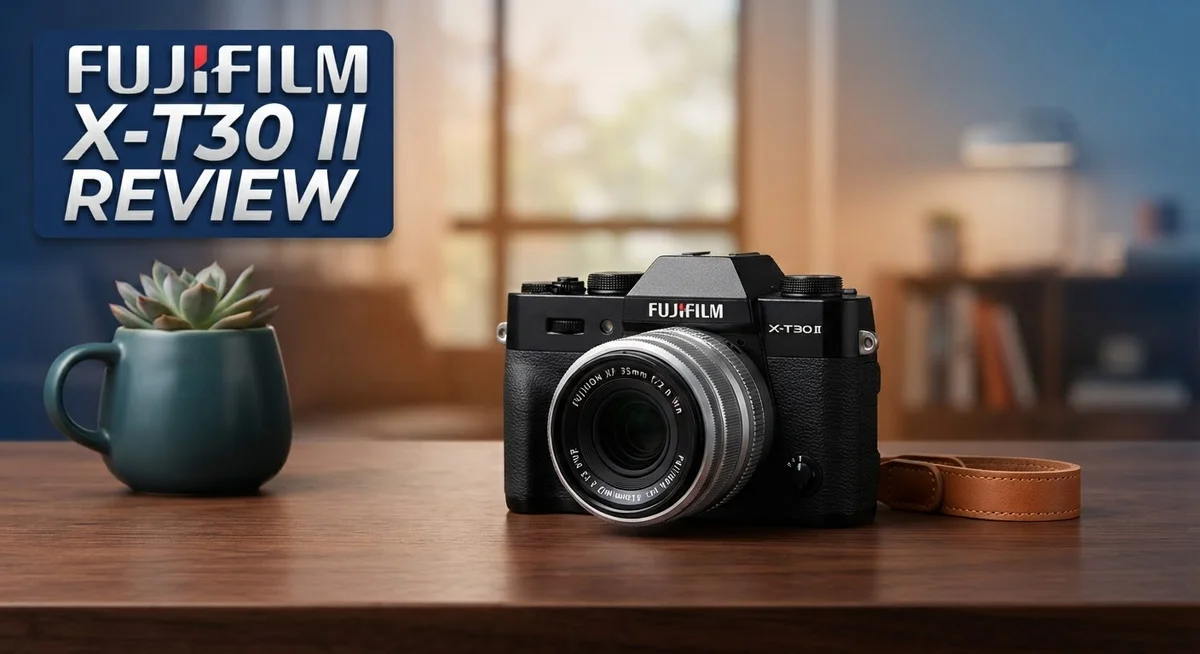
Fujifilm X-T30 II Review 2026: Should You Try This?
Looking for a camera that fits in your bag but doesn’t skimp on quality? The Fujifilm X-T30 II might be your answer.
This little camera packs a punch. It carries a 26.1MP APS-C X-Trans CMOS 4 sensor. That means sharp, detailed photos every time you shoot.
Travelers and everyday shooters love this camera. It stays light in your hands. It fits easily in a small bag or even a large pocket.
The X-T30 II shoots stunning stills. It also records 4K video at 30fps. Want slow motion? You get 1080p at 240fps for smooth, dramatic clips.
Fujifilm fans know the brand for its film simulation presets. This camera keeps that magic alive. You can customize your shots to match your creative vision.
So does the X-T30 II deserve a spot in your camera bag? This review breaks down every feature. We cover the pros, the cons, and how it stacks up against other Fujifilm models. Let’s find out if this compact powerhouse fits your photography needs.
In a Nutshell
- The 26.1MP X-Trans CMOS 4 sensor captures sharp detail at up to 6240x4160px, perfect for prints or crops.
- You get 4K video at 30fps plus 1080p at 240fps, letting you create smooth slow motion clips.
- Physical dials and buttons give you hands on control over settings, so you skip digging through menus.
- Low light shots need extra care. High ISO performance stays modest compared to full frame rivals.
- Video sits behind stills here. This camera shines brightest when you shoot photos, not films.
- Next to siblings like the X-T50 or X100VI, the X-T30 II keeps things simple, light and pocket friendly.
- It suits shooters who want strong image quality without carrying a bulky setup.
This camera fits solo travelers, street photographers and hobbyists who value portability over pro level video tools. It rewards you with crisp stills and a body that feels good in hand every single day.
Sensor and Image Quality
The X-Trans CMOS 4 sensor is where the X-T30 II truly shines. This 26.1 megapixel chip captures images with impressive clarity and fine detail across a wide range of shooting situations.
Color reproduction stands out as a major strength. Fujifilm’s sensor design works hand in hand with the camera’s film simulation modes to deliver rich, accurate colors straight from the camera. You won’t need heavy editing to get pleasing results.
Dynamic range performance lets you recover detail in both bright skies and dark shadows. The sensor handles tricky lighting better than you might expect from such a compact body. Highlights stay controlled while shadow areas retain usable information.
Noise levels remain clean at standard ISOs. Push the camera to higher sensitivities and grain becomes more visible, which is normal for an APS-C sensor this size. Most shooters find ISO 3200 perfectly acceptable for everyday work.
The X-Trans color filter array deserves mention here. Unlike traditional Bayer patterns, this design reduces moiré patterns and improves detail rendering. You’ll notice sharper edges and smoother gradients compared to other sensors in this class.
Autofocus performance ties directly to image quality. The camera locks onto subjects quickly and accurately, which means fewer missed shots. Phase detection pixels across the sensor help track moving subjects reliably.
Sharpness from edge to edge impresses when you use quality lenses. The sensor resolves fine details that justify the 26.1 megapixel count. Crops and prints both benefit from this level of detail capture.
Color science deserves special attention. Fujifilm’s decades of film manufacturing experience shows here. Skin tones look natural and pleasing without excessive processing. Greens and blues maintain separation instead of blending together.
The camera handles mixed lighting well. White balance stays accurate indoors and outdoors. Manual white balance adjustment gives you creative control when needed.
Overall, the sensor delivers professional grade image quality in a body that fits your pocket. You get reliable performance across most shooting scenarios without needing expensive gear or complex workflows.

- Camera: 26.1MP APS-C X-Trans BSI CMOS 4 Sensor; X-Processor 4 with Quad CPU; DCI and UHD...
- Camera: 3.0" 1.04m-Dot Tilting LCD Touchscreen; 425-Point Phase-Detection Autofocus...
Last update on 2026-09-26 / Affiliate links / Images from Amazon Product Advertising API
Design and Build Quality
The X-T30 II feels solid in your hands. Fujifilm designed this camera with a compact aluminum body that resists bumps and drops. The magnesium alloy frame keeps weight down while maintaining durability for daily use.
The grip sits naturally on your palm. Your fingers wrap around the right side without strain. The textured rubber coating prevents slipping when your hands are wet or sweaty. This matters for travel photographers working in humid climates or near water.
Physical controls dominate the top plate. You get a dedicated shutter speed dial, ISO dial, and exposure compensation dial. Turning these knobs feels satisfying and responsive. No cheap plastic here. Each dial clicks into place with precision, giving you confidence in your adjustments.
The viewfinder sits centered on the back. Fujifilm packed a 2.36 million dot electronic viewfinder into this small body. You see your frame clearly without pressing your eye uncomfortably close. The rear LCD screen flips down for selfies and low angle shots, adding flexibility to your shooting style.
Weather sealing gets a mention. The X-T30 II features dust and moisture resistance at key joints. This protection isn’t military grade, but it handles light rain and dusty environments. You won’t hesitate to shoot outdoors on unpredictable days.
The camera weighs just 383 grams with battery and card. That makes it lighter than most smartphones paired with a lens. Slip it into your everyday bag without noticing the extra load.
Button placement feels intuitive. Your thumb reaches the AF-ON button easily. The menu button sits where you expect it. Function buttons let you assign custom shortcuts, reducing menu diving during shoots.
Build quality reflects Fujifilm’s attention to detail. Seams align perfectly. The battery door closes with a satisfying click. Everything feels intentional and well executed. This isn’t a camera that feels cheap or rushed. Photographers appreciate cameras built to last, and the X-T30 II delivers on that promise. The design balances portability with substance, making it reliable for years of regular use.
Video Capabilities and Performance
The X-T30 II handles video recording with solid fundamentals. You get 4K capture at 30fps, which works well for everyday projects, vlogs, and travel content. The camera also shoots 1080p at 240fps, giving you smooth slow motion effects without needing external hardware or software tricks.
Video autofocus performs reliably during recording. The camera tracks moving subjects without hunting too much. You won’t experience jarring focus shifts when panning across scenes. This stability matters when you’re shooting handheld or following action.
Color science carries over from stills into video mode. Your footage inherits the same rich color reproduction you see in photos. Fujifilm’s film simulation presets apply to video too, so you can bake in a specific look straight from the camera. This saves editing time later.
The camera records to SD UHS II cards. File sizes stay manageable at 4K, so you don’t need massive storage banks. Battery life holds up during recording sessions. You can shoot multiple clips before needing a charge.
One thing to note: video sits secondary to stills on this camera. The X-T30 II prioritizes photography performance. You won’t find advanced video features like 4K 60fps, log profiles, or external audio inputs. The microphone is built in but basic. If you need professional video tools, other cameras serve that mission better.
Audio recording works for casual purposes. Wind noise can be an issue outdoors, so an external microphone helps if you’re serious about sound quality. You control audio levels through the menu system.
Heat management stays stable during typical shooting. The camera doesn’t overheat or shut down during normal video sessions. Extended recording in hot conditions may require breaks, but casual use presents no problems.
The viewfinder stays active while recording, letting you frame shots accurately. You see real time exposure and focus feedback. This live preview helps you catch mistakes before they happen.
Overall, the X-T30 II delivers competent video performance for creators who blend photo and video work. It excels when you prioritize image quality and portability over advanced video specifications.
Top 3 Alternatives
Sony Alpha a6400

- 20.1MP stacked back illuminated 1" Exmor RS CMOS sensor w/ DRAM, large aperture 24-70mm...
- Enhanced subject capture: wide 425 Phase/ 425 contrast detection points over 84 percent of...
Last update on 2026-09-26 / Affiliate links / Images from Amazon Product Advertising API
The Sony Alpha a6400 offers fast autofocus performance that rivals professional cameras. This camera features 425 phase-detection autofocus points. You get real-time eye tracking and animal eye tracking features. The compact body fits easily in your bag.
The camera shoots 4K video at 30fps. You can record in multiple codecs for flexibility. The articulating screen flips up for vlogging. Battery life reaches approximately 410 shots per charge.
Canon EOS M50 Mark II

- 24.1 megapixel (aps-c) cmos sensor with iso 100-25600 (h: 51200).
- digic 8 image processor with auto lighting optimizer.
Last update on 2026-09-26 / Affiliate links / Images from Amazon Product Advertising API
Canon’s EOS M50 Mark II brings excellent video capabilities to content creators. The camera includes a fully articulating touchscreen. You get 4K video recording at 24fps. The autofocus system uses 143 autofocus points.
This model works well for streaming and vlogging. The compact design makes it portable. You can shoot 1080p at up to 120fps for slow-motion footage. The battery provides around 305 shots per charge.
Nikon Z fc
No products found.
The Nikon Z fc combines retro styling with modern features. This camera uses Nikon’s Z-mount system. The 20.9-megapixel sensor captures sharp images. You get 4K video recording at 30fps.
The articulating screen rotates for flexible shooting angles. Autofocus performance includes 209 autofocus points. The camera weighs just 340 grams. Battery life reaches approximately 300 shots per charge.
All three cameras offer compact designs. Each one delivers strong autofocus systems. They work well for both photography and video. Your choice depends on your specific needs and preferences.
Film Simulations and Creative Controls
Fujifilm built the X-T30 II around its legendary film simulations. These presets let you apply classic film stock looks straight from the camera. You get Provia, Velvia, Astia, Classic Chrome, Acros, and many others. Each one shifts colors and contrast in ways that feel authentic to real film.
The beauty here is instant creative control. You don’t need Lightroom or Photoshop to achieve a specific look. Just dial in your preferred simulation and shoot. The camera applies the effect in real time on your LCD and viewfinder.
Customization goes deeper than most cameras in this class. You can adjust color, shadow tone, highlight tone, and sharpness within each simulation. This means Velvia doesn’t have to look exactly like Velvia. You shape it to match your vision. Advanced users love this flexibility.
The Acros black and white simulation deserves special mention. It renders monochrome images with incredible tonal separation. Grain structure feels organic, not artificial. Street photographers and documentary shooters often stick with Acros for entire projects.
Film simulation stacking is another creative tool. You layer multiple effects to build unique looks that don’t exist in standard presets. This opens doors for experimental photography. Some shooters spend hours crafting their own signature style this way.
The camera also includes color chrome effects. These add extra saturation and pop to your images. You can push colors beyond what standard simulations offer. The effect works especially well for travel and lifestyle photography.
Grain simulation adds another layer of control. You choose grain size and intensity. This lets you add texture to digital files, mimicking film grain from different ISO speeds. Low grain looks clean and modern. High grain feels vintage and atmospheric.
All these tools live in the menu system. Navigation feels straightforward once you learn the layout. You access simulations quickly from the function buttons. Most shooters program their favorite simulations to one-touch access.
The X-T30 II encourages creative experimentation without overwhelming you. Whether you want film authenticity or digital freedom, the camera adapts to your style.
Battery Life and Portability
The X-T30 II packs impressive battery performance into a camera you can carry all day. Fujifilm rates the battery at approximately 390 shots per charge under standard conditions. Real world shooting often exceeds this figure, especially if you rely on the optical viewfinder instead of the rear LCD screen.
The LCD display drains your battery faster than the viewfinder. Switch to the electronic viewfinder and you’ll stretch your shooting time significantly. Many photographers report getting 500 plus shots on a single charge during typical outings.
Portability stands as one of the X-T30 II’s strongest selling points. The camera weighs just 383 grams with battery and memory card installed. This makes it lighter than most full frame cameras and comparable mirrorless competitors. The compact APS-C body fits easily into camera bags, backpacks, or even larger shoulder bags without bulk.
Dimensions measure 121.3 × 83.0 × 55.2 millimeters. The small footprint means you can slip this camera into spaces where larger cameras simply won’t fit. Travel photographers appreciate this advantage when moving between locations or hiking to shooting spots.
Battery management becomes simple with Fujifilm’s smart power settings. You can adjust LCD brightness, viewfinder refresh rates, and autofocus assist lighting to extend battery life. These tweaks add hours to your shooting day without sacrificing functionality.
Carrying spares is practical and sensible. Extra batteries cost less than many accessories and weigh almost nothing. Two batteries easily handle a full day of shooting for most photographers. Three batteries cover extended trips or intensive shooting sessions.
The camera charges via USB C or optional external chargers. USB charging lets you top up the battery using any modern power bank or laptop charger. This flexibility matters when traveling to remote locations or countries with different electrical standards.
Overall, the X-T30 II delivers the portability you want with battery life that keeps pace with your creative demands. The combination makes this camera ideal for photographers who value mobility without compromising on shooting capacity.
Pros and Cons
Pros
- 26.1MP sensor captures sharp, detailed images with excellent color accuracy across varied lighting
- Film simulations deliver instant creative control without post processing work
- Compact and lightweight body makes it perfect for travel and everyday carry
- Reliable autofocus performance during both photo and video shooting
- Strong battery life keeps you shooting through a full day of content creation
Cons
- Low light performance lags behind full frame competitors in high ISO situations
- Video remains secondary to stills, so 4K recording at 30fps may feel limited for serious filmmakers
- Autofocus tracking during video needs manual adjustments in some fast moving scenarios
- Menu system requires learning curve to access all creative customization options
Who Should Buy It
Content creators who shoot stills as their primary focus will find the X-T30 II a perfect match. The 26.1MP sensor captures exceptional detail, and the film simulations let you apply creative looks straight from the camera without spending hours editing later.
Travel photographers love this camera because it fits easily into a backpack or shoulder bag. You get professional image quality without lugging around heavy gear. The compact body paired with strong battery life means you can shoot an entire day of sightseeing without stopping to charge.
Everyday users who want something better than their smartphone appreciate the X-T30 II’s simplicity combined with power. The menu system feels intuitive once you learn the basics. You don’t need to be a technical expert to get gorgeous photos.
Hybrid creators who shoot both photos and videos will appreciate the solid 4K performance at 30fps and excellent 1080p slow motion at 240fps. However, if video is your main priority, you might want to explore other options. This camera shines brightest when stills take the lead role.
Photography enthusiasts exploring the Fujifilm ecosystem make up another core audience. The X-T30 II works wonderfully as your first X series camera or as a backup body. You gain access to Fujifilm’s extensive lens lineup and join a community passionate about film simulation presets.
Street photographers benefit from the quiet shutter and compact form factor. You can blend into crowds and capture candid moments without drawing attention. The autofocus keeps pace with fast moving subjects, making it reliable for unpredictable shooting situations.
Budget conscious professionals who need a secondary camera find real value here. The image quality rivals cameras costing significantly more. You get professional results without breaking your gear budget.
Vlogging and content creation take a backseat with this model. If you plan to shoot handheld videos with constant autofocus tracking and need advanced video features, consider alternatives designed specifically for that purpose.
The X-T30 II serves photographers and creators who prioritize image quality, portability, and creative control. It excels when you want to carry professional capability in your everyday bag.
Final Verdict
The Fujifilm X-T30 II earns its place as a smart choice for photographers who value image quality over flashy extras. It handles daily shooting tasks with ease and consistency.
This camera shines brightest in the hands of someone who prioritizes stills. If photos matter more to you than video, this body fits your workflow well.
The X-T30 II holds its own against the X-T30 III and X-S10. Each model offers small upgrades, but the core experience stays similar across the lineup.
Compared to the X100VI, this camera offers more flexibility. You get interchangeable lenses instead of a fixed one, which opens up creative options over time.
Fujifilm’s X-mount ecosystem adds long term value here. You can grow your kit with new lenses as your skills and needs change.
Beginners will find the learning curve manageable. Experienced shooters will appreciate the manual controls and dial based operation that speeds up their workflow.
This camera rewards patience and practice. Spend time with the film simulations and you will develop a personal style faster than expected.
Should you skip this model? If professional video work drives your projects, look elsewhere. The X-T30 II simply was not built with filmmakers in mind.
For everyone else focused on photography, this camera delivers real value. It combines portability with genuine creative control in one solid package.
The X-T30 II does not try to be everything. It focuses on doing photography well, and that focus pays off in daily use.
Pick this camera if you want a dependable companion for stills first shooting. Pick something else if video is your main priority.
Overall, this camera earns a strong recommendation for photography enthusiasts. It performs well, feels great in hand, and produces images that make you proud.
Frequently Asked Questions
Does the X-T30 II work well for beginners?
Yes, absolutely. The X-T30 II has a simple menu system that doesn’t overwhelm new photographers. You can start shooting in auto mode and gradually explore manual controls. The camera rewards patience and practice as you grow your skills.
Can I shoot professional videos with this camera?
The X-T30 II handles 4K at 30fps and excellent 1080p slow motion. However, video remains secondary to stills on this model. If professional filmmaking drives your projects, you should explore other options. For hybrid creators who shoot both photos and videos, the performance feels solid enough.
How does the X-T30 II compare to other Fujifilm cameras?
It holds its own against the X-T30 III and X-S10. Compared to the X100VI, this camera offers more flexibility and lens options. The X-mount ecosystem adds long term value since you can grow your lens collection over time.
Is the battery life really that good?
Strong battery life keeps you shooting through a full day of content creation. Most photographers find they can capture plenty of images before needing to swap batteries. This makes it excellent for travel and outdoor work.
What type of photographer should buy this camera?
Street photographers love the quiet shutter and compact form factor. Travel photographers appreciate how it fits easily into a backpack. Everyday users who want something better than their smartphone will find the simplicity combined with power appealing. Photography enthusiasts exploring the Fujifilm ecosystem make up another core audience.

I’m Lipi, a passionate blogger with a keen interest in artificial intelligence and its applications. On my blog, lipiai.blog, I share information about AI, review different AI tools, and provide helpful guides. My goal is to make AI easy to understand for everyone. I enjoy simplifying complex ideas so that both beginners and tech-savvy folks can learn.